What Is Duty of Care in Corporate and Executive Travel?
For corporate travel, duty of care means your organization must take reasonable, documented steps to identify foreseeable risks to an employee on a trip, reduce those threats before departure, track the traveler in transit, and respond quickly to an emergency. It's an enforceable legal obligation, not a slogan or an aspiration. A sales manager flying to Mexico City falls under the same standard as a CEO attending a board meeting in Riyadh.
Employment law, occupational safety regulations, and negligence case law form the basis of this obligation. ISO 31030, the travel risk management standard, has provided a formal international benchmark since 2021. Your travel policy likely falls short of that benchmark if it can't document what you assessed, what guidance you gave the traveler, and how you'd reach them in a crisis.
Employers who fail to protect traveling staff are consistently held liable by courts in the United States, the United Kingdom, and across the European Union. Decades of litigation, including kidnapping suits and wrongful death claims, have established a clear precedent: your organization bears the liability when you send personnel into harm's way without adequate preparation.
AMERINE builds travel programs for corporate and UHNW principals using an operational framework that addresses legal requirements and essential travel risk policy components. You'll find sample policy structures in our executive travel security policy that works and guidance for multi-country footprints in international travel security program design.
The Legal Framework
U.S. Legal Standards
Employers have a "general duty" under the Occupational Safety and Health Act (OSHA) to provide a workplace free from recognized hazards. That duty extends to travel assignments through court rulings, particularly for high-risk destinations. The key principles include:
- Employers must assess foreseeable risks before assigning international travel
- Reasonable precautions must be taken based on the threat environment
- Failure to warn employees of known risks constitutes negligence
- Organizations can be held liable even if the employee is a willing traveler
International Standards
Travel risk management is the specific focus of ISO 31030:2021, which provides a globally recognized framework. Under the standard, organizations should:
- Implement a formal travel risk management program
- Conduct destination-specific risk assessments
- Provide pre-travel briefings and training
- Maintain communication and monitoring during travel
- Have crisis response plans for every destination
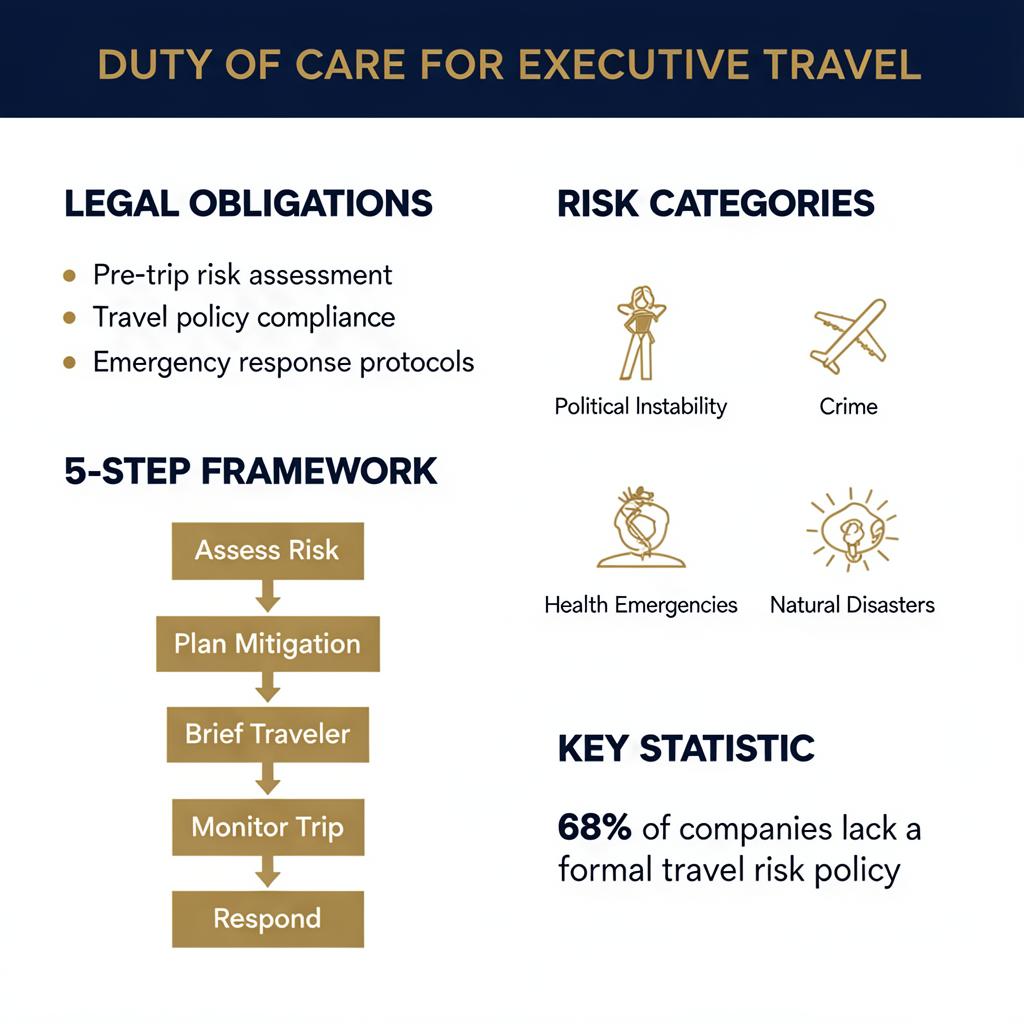
The Five Pillars of Travel Duty of Care
1. Risk Assessment
Before any executive trip, a thorough assessment should evaluate:
- Political stability and civil unrest indicators
- Crime rates and patterns targeting foreign travelers
- Terrorism threat levels and recent incidents
- Health risks, including endemic diseases and local medical infrastructure
- Natural disaster exposure and seasonal hazards
- Transportation safety standards
- Cyber threats and digital surveillance risks
2. Policy and Planning
Any organization sending personnel overseas needs clear operational baselines in place:
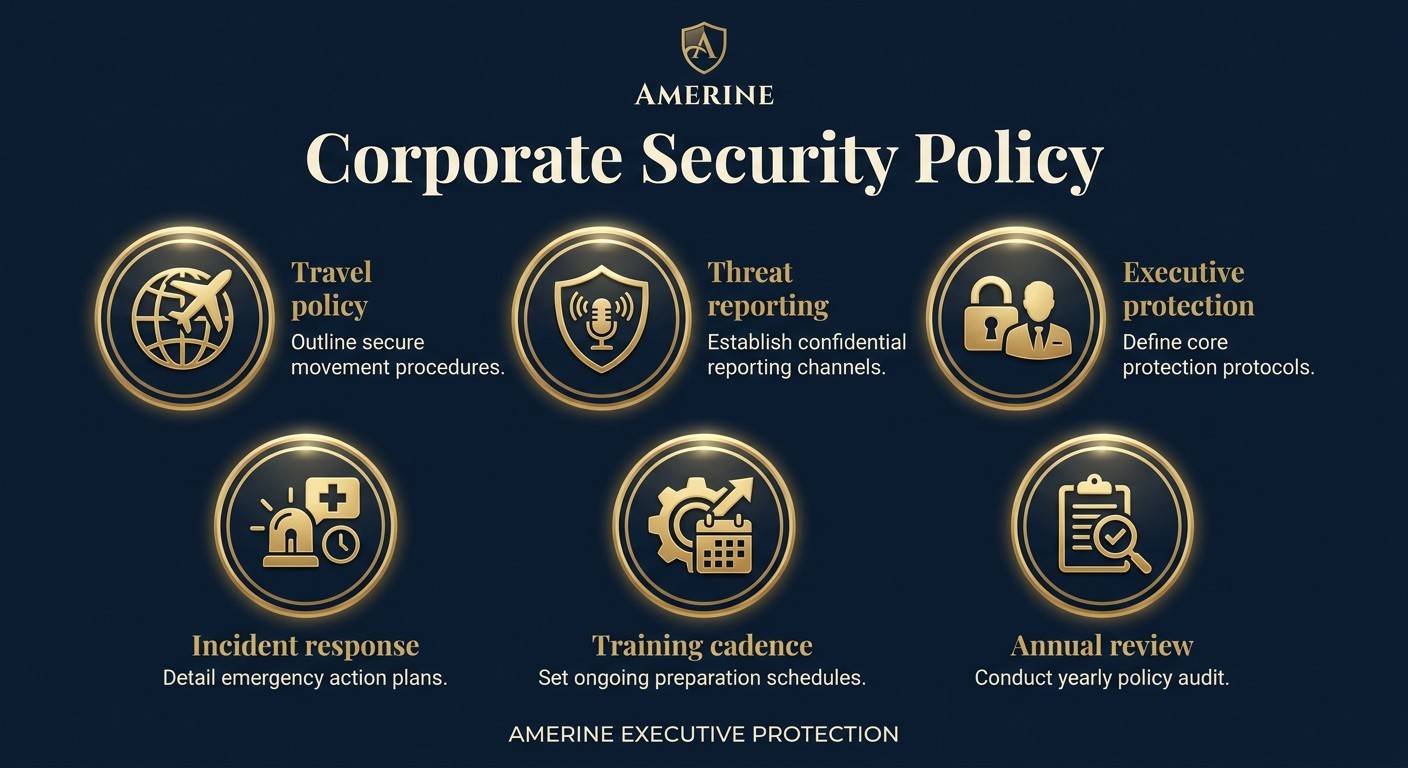
- A written travel risk management policy
- Destination-specific security protocols
- Pre-approved lists of vetted hotels, transport providers, and medical facilities
- Formal authorization procedures for high-risk destinations
- Insurance policies covering medical evacuation, kidnap and ransom, and emergency repatriation
3. Pre-Travel Preparation
Prior to departure, travelers need direct preparation:
- A destination-specific security briefing covering active threats
- Emergency contact cards with 24/7 response numbers
- Secure communication tools and VPN access
- Medical prep, including required vaccinations and necessary prescriptions
- Cultural awareness guidance to avoid inadvertent offense or unwanted attention
4. In-Trip Monitoring
While personnel are in transit, the organization must stay engaged:
- Track traveler locations through voluntary check-in systems
- Monitor real-time threat intelligence tied to the itinerary
- Maintain an open communication channel with the traveler
- Keep response capabilities pre-positioned within the region
- Run regular situational updates on extended trips
5. Incident Response
When emergencies happen, speed matters:
- Activate established crisis management protocols
- Deploy local security assets immediately
- Coordinate directly with embassy and consular officials
- Manage medical evacuation if required
- Handle family notification and support
- Document every action for legal and insurance records
Common Failures That Create Liability
The "It Won't Happen to Us" Mindset
Many organizations treat travel security as an afterthought until an incident occurs. Common failures include:
- Sending executives to high-risk countries with no security briefing
- Relying on commercial hotels without vetting security standards
- Using unvetted local transportation including ride-share apps
- Failing to register travelers with embassy programs like STEP
- Having no crisis response plan or emergency contacts in-country
- Assuming travel insurance alone satisfies duty of care
Real-World Consequences
Organizations that neglect travel duty of care face:
- Wrongful death and negligence lawsuits with multi-million dollar settlements
- Workers' compensation claims for travel-related injuries
- Regulatory penalties and compliance failures
- Reputational damage and loss of executive talent
- Increased insurance premiums across the organization
Building a Travel Risk Management Program
Step 1: Assess Your Current State
Start by auditing your existing travel policies for destination risk ratings, pre-travel briefing procedures, and emergency response protocols. If you have none of these, you're starting from scratch. That's fine as long as you get started now.
Step 2: Classify Destinations by Risk Level
Group travel destinations into tiers:
- Tier 1 (Standard): Major Western cities with low security concerns
- Tier 2 (Elevated): Destinations with moderate crime or political instability
- Tier 3 (High): Countries with active conflict, terrorism, or kidnapping risks
- Tier 4 (Extreme): Active war zones or areas under travel advisories
Step 3: Match Security Measures to Risk Levels
Assign clear operational requirements to each tier:
- Tier 1: Standard travel insurance and emergency contact information
- Tier 2: Security briefing, vetted hotels, and airport transfers
- Tier 3: Executive protection detail, secure transportation, and 24/7 monitoring
- Tier 4: Board-level approval required, full protective team, and evacuation plan
Step 4: Train Your People
Security awareness training should address:
- Situational awareness and threat recognition
- Secure communication practices
- Hotel and transportation security
- What to do during common emergencies (civil unrest, natural disaster, medical emergency)
- Cultural sensitivity and behavioral risk reduction
Step 5: Test and Improve
Use annual tabletop exercises to simulate travel emergencies, and benchmark your practices against ISO 31030 standards. After every significant incident or near-miss, review the program and update it.
How AMERINE Supports Corporate Duty of Care
Our travel security services help organizations meet and exceed their duty of care obligations through clear, practical measures:
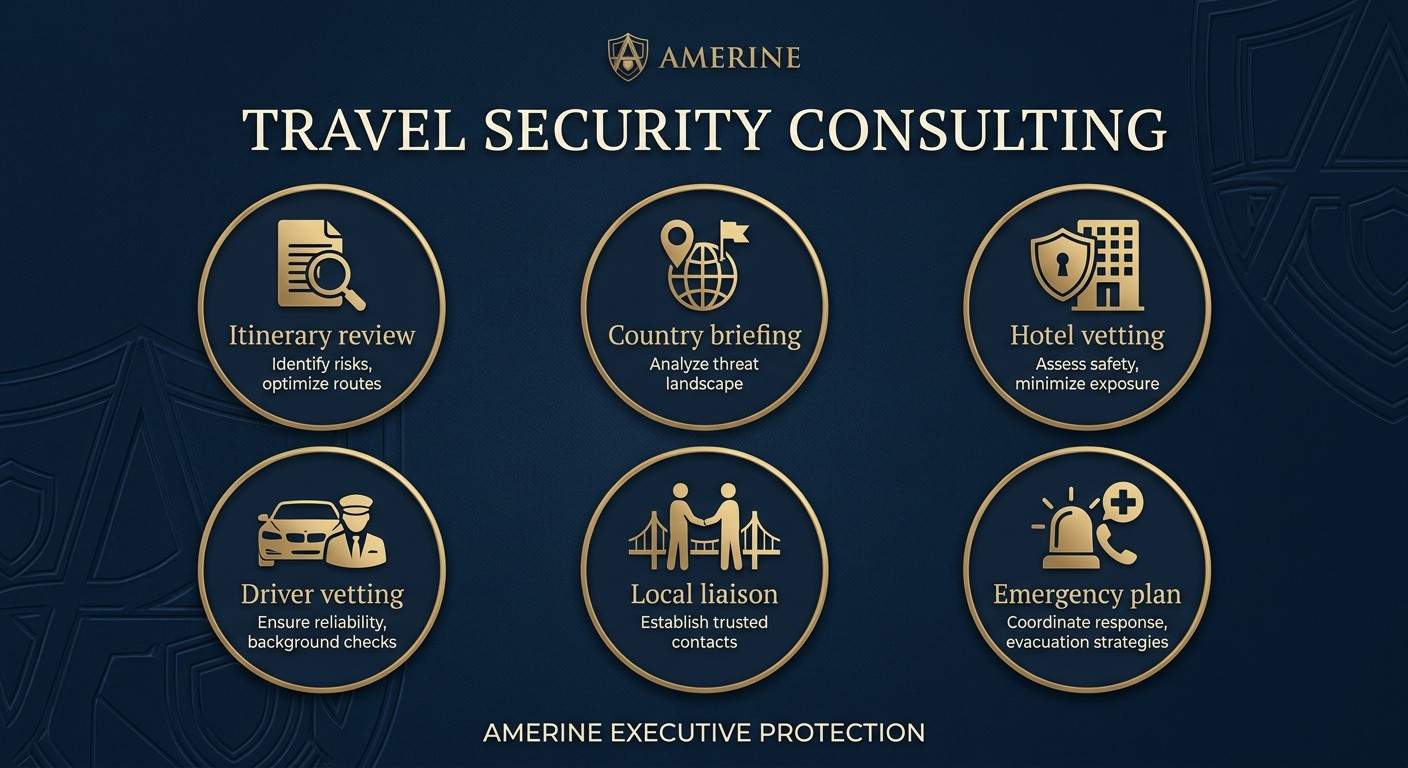
- Pre-travel intelligence briefings and risk assessments for any destination
- Executive protection details for high-risk travel
- Secure transportation and logistics planning
- 24/7 monitoring and crisis response capabilities
- Travel security training for frequent business travelers
- Policy development and compliance consulting
If your organization has recurring travel exposure, our membership programs offer standing coverage rather than trip-by-trip engagement, with retained capacity for assessment, monitoring, and response.
The Bottom Line
Organizations that take executive travel duty of care seriously protect their people, reduce liability, and build cultures where top talent feels valued and secure. It's a legal requirement with real consequences, not an option. Organizations that disregard it gamble with lives and livelihoods.
For a confidential assessment of your organization's travel risk management program, Contact AMERINE. We work with companies of all sizes to build practical, effective protection frameworks that keep their people safe.
Frequently Asked Questions
What is duty of care in corporate travel?
Duty of care in corporate travel is an employer's legal obligation to take reasonable steps to protect employees from foreseeable harm while traveling for work. In practice it requires four things: a documented risk assessment of the destination before approval, a pre-travel briefing that warns the traveler of known risks, a way to locate and communicate with the traveler during the trip, and a crisis response plan capable of reaching them. ISO 31030:2021 is the recognized international framework for meeting it.
Is duty of care legally required for business travel?
Yes. In the United States, the OSHA "general duty" clause plus negligence and workers' compensation law create employer liability for foreseeable travel harm. The UK applies the Health and Safety at Work Act and the Corporate Manslaughter and Corporate Homicide Act, and EU member states apply the Framework Directive on occupational safety. Courts have repeatedly held employers liable for injuries, kidnappings, and deaths abroad where no assessment, warning, or response plan existed, and an employee volunteering for the trip does not waive the obligation.
What should a corporate travel risk policy include?
A defensible corporate travel risk policy should include a tiered destination risk rating system, approval thresholds tied to each tier, mandatory pre-travel briefings for elevated-risk destinations, vetted hotel and ground transportation lists, insurance covering medical evacuation and kidnap and ransom, traveler tracking and check-in procedures, 24/7 emergency contacts, a written crisis response and evacuation plan, and an annual review with tabletop testing. Every element should be documented, because the documentation is what demonstrates compliance after an incident.