Private Aviation to Ground — One Accountable Provider
Executive Transportation, Global FBO Coordination & Protective Drivers
Secure transportation for executives, families, public figures, and visiting principals who need more than a conventional chauffeur. Scope can include a protective driver, airport or FBO coordination, route and venue advance work, and coordination with an existing close-protection team. A full executive-protection detail is added only when the assessed need extends beyond the movement itself.
Need protection around the principal as well as the vehicle? Review our executive protection scope. Planning a Dallas–Fort Worth movement? See the DFW service guide.
Request an initial transportation consultation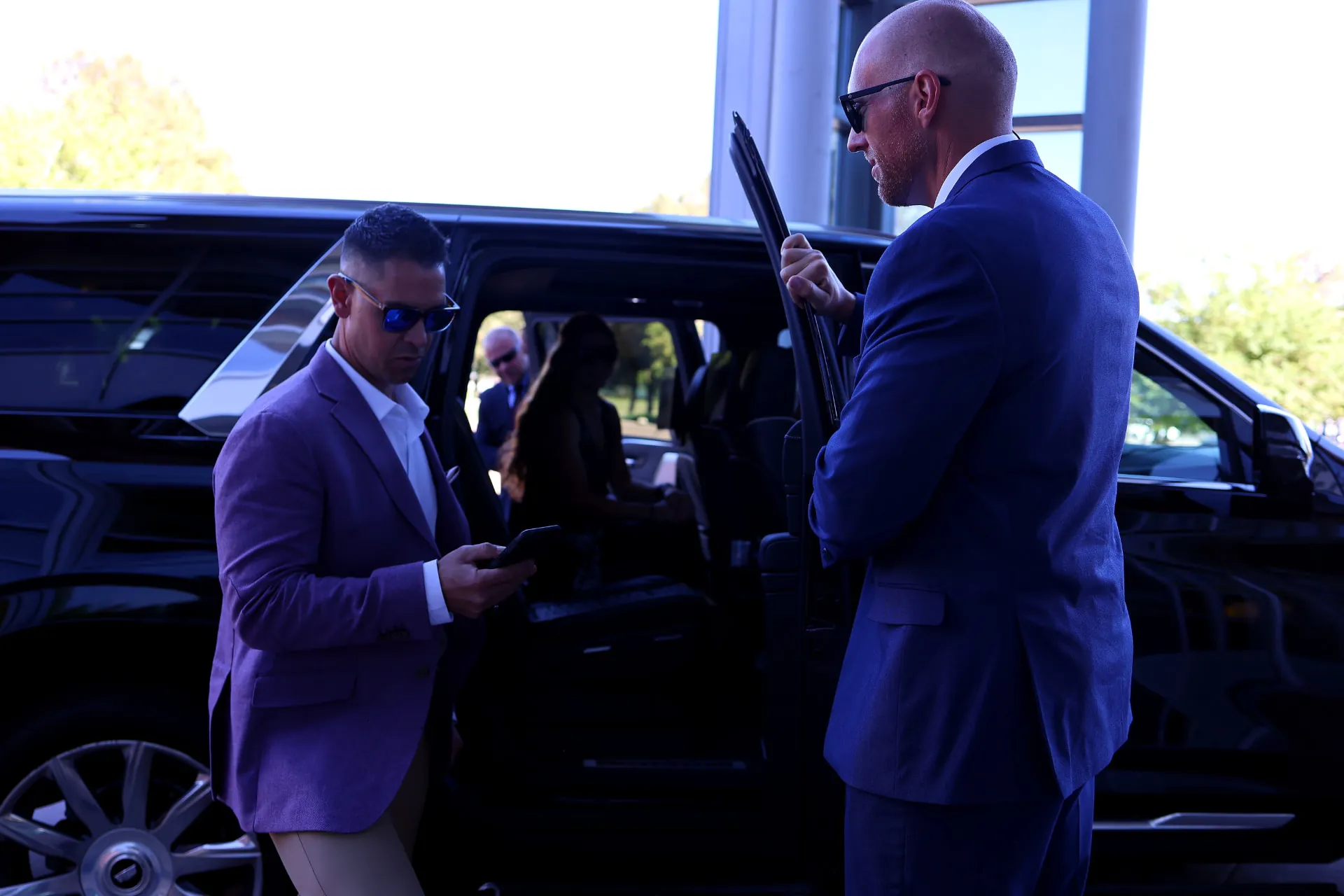
What a security driver is
A security driver, or protective driver, is a trained protection agent who drives. That is the difference. A chauffeur's job ends at the curb. A protective driver's job covers the whole movement: the route, the arrival, the door, the walk inside and the wait until the principal comes back out.
Our drivers come from protection backgrounds and are briefed on the principal, the schedule and the venues before the day begins. They plan primary and alternate routes and know where the vehicle will stage. They know which entrance is in use and who is meeting the principal on arrival. When a schedule changes midday, which it usually does, the driver adjusts the plan instead of waiting for instructions.
Tandem vehicles from the same team
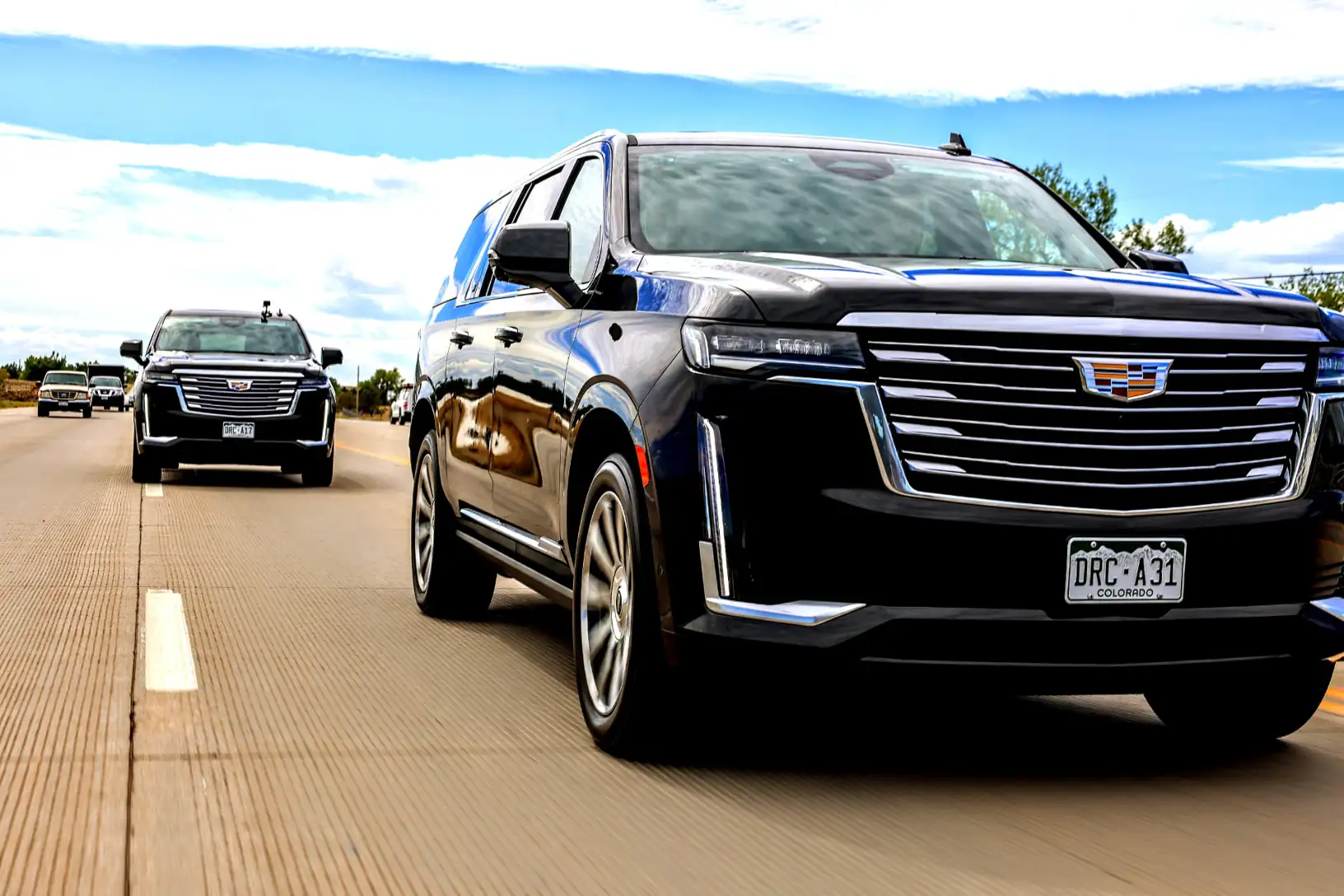
Where the assessment calls for it, we run a second vehicle crewed by the same team. The second car is not just extra seating. It can block at an arrival point, hold a lane and give the lead vehicle room to move. Because both vehicles answer to the same detail lead and share one plan, they move as a unit. That is hard to do with two vendors who met that morning.
For a solo principal on a routine day, one vehicle is usually enough. For a group, an event or a higher-exposure movement, two vehicles may be recommended. The configuration is stated in the written scope.
Your vehicle or ours
Many principals prefer to ride in their own vehicles. That works. A protective driver can operate the client's vehicle under an agreed handling and insurance arrangement confirmed with the family office. Where a client vehicle is not practical, as with an out-of-town leg or a group movement, we arrange vetted vehicles and drivers.
An armored vehicle is not required for most programs. Whether one is warranted is a question for the threat assessment, not a starting assumption.
One engagement for the whole day
Secure transportation works best when it follows the way principals actually move. A day with a breakfast, two meetings, a lunch and a dinner is one engagement, not five bookings. The same agent is behind the wheel from the first movement to the last, and your office manages one schedule with one team.
Hours, scope and terms are confirmed in writing before the first day.
How it fits with FBO and aviation coordination
Ground transport is planned alongside private aviation, not after it. When a principal flies, the driver's plan is built from the same itinerary the flight management company and crew use. We coordinate arrival points, vehicle access and timing with the FBO under its procedures, and the vehicles are staged before the aircraft is on the ground.
At the destination, we book all ground transport so the vehicles arrive together and the transfer from aircraft to car runs as one movement. See Private Aviation Security for how the airside plan works.
What is confirmed in writing
- Driver or drivers assigned, and their protection background
- Vehicle source (client vehicle, arranged vehicle or tandem configuration)
- Hours covered and the terms of the engagement
- Routes, staging and handoff points for scheduled movements
- Who the driver reports to and how schedule changes are communicated
Further Reading on Executive Transportation
Transportation
Security Driver or Car Service: A Decision Guide for Family Offices
At the curb, the two look the same: a clean vehicle, a well-dressed driver and a door opened at the right moment. Family offices that compare an executive driver from a car service with a security driver on the surface usually end up comparing the wrong things.
Read articleTravel Security
World Cup 2026: The 14-Day Pre-Departure Security Countdown for Executives and Families
With kickoff on June 11, the next two weeks are decisive. This is the day-by-day security countdown AMERINE walks executives, UHNW families, and corporate delegations through before they leave for the FIFA World Cup 2026.
Read articleTravel Security
FIFA World Cup 2026 Travel Security Planning: What Executives, Families, and VIP Travelers Should Do Now
The 2026 FIFA World Cup will create one of the most complex U.S. travel periods in years. For executives, UHNW families, and VIP travelers, an itinerary should be treated as a protective movement plan — not a hotel booking.
Read articleFrequently Asked Questions
What does tarmac-to-ground coordination actually mean?
We work directly with the principal's flight department and our global FBO partners to stage the ground vehicle planeside or at the FBO entrance. The protective driver, ops center, and flight crew are all in live communication so the handoff from aircraft to vehicle is immediate, private, and documented.
Which FBOs do you work with?
We maintain working relationships with Signature, Jet Aviation, Atlantic, Million Air, and regional operators across primary executive airports in North America, Europe, the Middle East, Latin America, and Asia-Pacific. For airports outside our standing network we engage trip-support providers and confirm credentials in advance.
What makes protective drivers different from regular chauffeurs?
Our drivers complete advanced defensive driving training, threat recognition coursework, and ongoing proficiency evaluations. They're security professionals who happen to drive, not drivers with security add-ons.
Can I use my own vehicles?
Yes, we can integrate with your existing fleet. We'll conduct a vehicle security assessment and recommend any enhancements while our drivers operate your preferred vehicles.
How do you handle schedule or flight changes?
Communication and change procedures are confirmed before the movement. When a change occurs, the team reassesses timing, staging, routes, and provider availability against the agreed scope.
What is the difference between a security driver and a car service?
A car service provides a vehicle and a driver. A security driver is a trained protection agent who plans the route, the arrival and the door, and stays with the principal through the day.
Can your driver use our vehicle?
Yes. Our drivers regularly operate client vehicles under an arrangement confirmed with the family office. An armored vehicle is not required for most programs.
How is a protective driving engagement set up?
After an assessment of the principal's schedule and exposure. Drivers, vehicles, hours and terms are confirmed in writing before coverage begins.
Do you coordinate with our FBO and flight crew?
Yes. Ground plans are built from the same itinerary as the flight, and arrival and departure are coordinated with the FBO under its procedures.
Explore Executive Transportation planning by market:
Related Services & Briefings
Most clients pair this service with one or more of the capabilities below.
- Executive Protection
Planning-led protection with personnel requirements confirmed by scope.
- Travel Security
One-time trip consulting or an ongoing readiness relationship.
- Estate Security
Layered residential perimeter, staff vetting, and quiet posture.
- State of Executive Protection 2026
AMERINE's annual benchmark on EP threat trends, staffing, and program maturity.
- How a Program Is Scoped
What drives the scope of a protection program.
- Subscription Agreements
Ongoing readiness governed by the signed agreement.
Begin the Conversation
Ready to Discuss Your Security Requirements?
Begin with a confidential conversation about your requirements. The consultation can define an appropriate next step, scope, and written responsibilities.
What happens next
The first conversation confirms fit, the appropriate next step, and how any sensitive details should be exchanged.
Contact Information
Direct Line
+1 (281) 799-1877Secure Email
scott@amerineexecutivelogistics.comHeadquarters
Dallas–Fort Worth, Texas
Travel support considered by destination and scope
Prefer a secure channel? Request our encrypted communication options during your initial consultation.