Why Every Organization Needs a Written Security Policy
A corporate security policy is the foundation of your organization's security program. It establishes expectations, defines responsibilities, provides authority for security measures, and demonstrates due diligence in protecting employees, assets, and information.
Without a written policy, security is ad hoc — decisions are made reactively, standards are inconsistent, and the organization is vulnerable to both threats and liability.
Step 1: Executive Sponsorship
The security policy must have C-suite sponsorship — ideally the CEO or COO. Without executive backing:
- Departments will ignore requirements
- Security will not be viewed as a risk management function
Step 2: Risk Assessment
Before writing policy, understand what you are protecting against:
- Asset inventory: People, physical assets, intellectual property, reputation
- [Threat assessment](/threat-assessment-services): What threats are credible for your industry and geography?
- Vulnerability assessment: Where are the gaps in current protection?
- Impact analysis: What happens if each threat is realized?
Step 3: Policy Framework
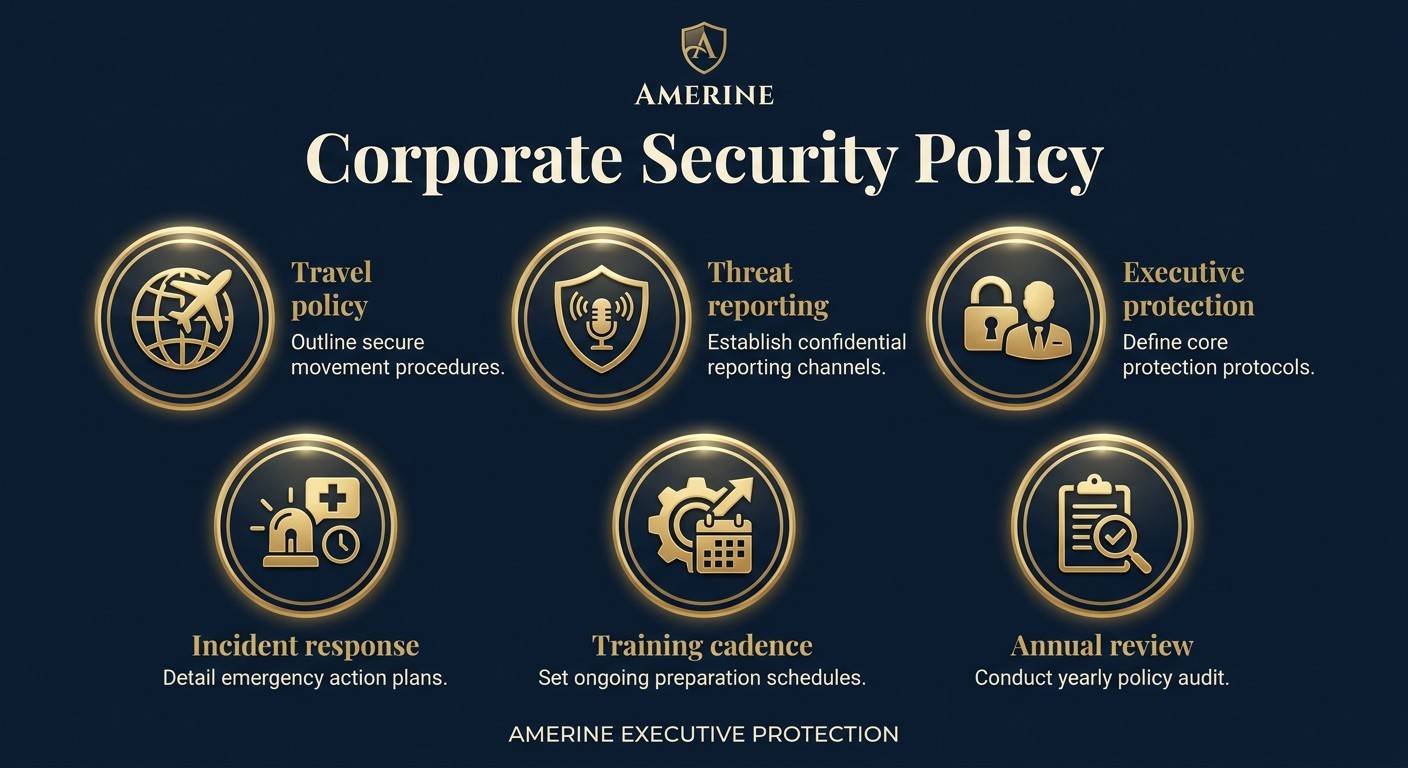
Structure the policy around these core domains:
Physical Security
- Facility access control requirements
- Visitor management procedures
- Security system standards (cameras, alarms, barriers)
- Key and credential management
- Security guard/officer requirements
Personnel Security
- Background check requirements by role
- Security clearance levels and access tiers
- Termination security procedures
- Workplace violence prevention
- Employee security awareness training
Travel Security
- Travel risk assessment requirements
- High-risk destination protocols
- Executive protection criteria and triggers
- Emergency communication procedures
- Duty of care compliance measures
Information Security
- Data classification and handling
- Clean desk and screen policies
- Secure communication requirements
- Social media guidelines
- Document destruction procedures
Executive Protection
- Criteria for when executive protection is required
- Authority to engage protective services
- Coordination between corporate security and EP providers
- Family protection parameters
Incident Response
- Incident classification and severity levels
- Reporting chain and notification requirements
- Initial response procedures
- Investigation protocols
- Post-incident review process
Crisis Management
- Crisis management team composition and authority
- Communication protocols (internal and external)
- Business continuity triggers
- Media management procedures
- Government and law enforcement coordination
Step 4: Implementation
Communication
- All-hands announcement of the new policy
- Department-specific briefings
- New employee orientation inclusion
- Annual refresher training
Training
- Role-specific training requirements
- Annual security awareness programs
- Tabletop exercises for crisis scenarios
- Physical drills (evacuation, lockdown)
Enforcement
- Clear consequences for policy violations
- Investigation procedures for alleged violations
- Appeals process
- Documentation and record-keeping
Step 5: Review and Update
Security policies must be living documents:
- Annual review of all policy sections
- Incident-driven updates when events reveal gaps
- Regulatory updates when laws or standards change
- Organizational updates when the company structure changes
Contact AMERINE for corporate security consulting including policy development, risk assessment, and security program design.