Corporate Executive Protection: Duty of Care in the Modern Era
Corporate boards face increasing pressure to protect key executives. Beyond the obvious human considerations, there are significant legal and fiduciary dimensions to executive protection. Understanding duty of care in the context of executive security has become essential for modern corporate governance.
The Evolving Threat Landscape for Executives
Today's executives face diverse and evolving threats:
- Targeted Violence: Disgruntled employees, activists, or mentally unstable individuals
- Kidnapping & Extortion: Particularly for executives with international travel
- Stalking & Harassment: Often enabled by easily accessible personal information
- Protest Activity: Executives as targets of activist campaigns
- Cyber-Enabled Physical Threats: Online threats that translate to real-world risks
Duty of Care: The Legal Framework
Organizations have legal obligations to protect employees, including executives:
Common Law Duty of Care
Employers must take reasonable steps to ensure employee safety. For executives facing elevated threats, "reasonable steps" extends beyond standard security measures.
Regulatory Requirements
Certain industries (financial services, healthcare) have specific requirements for protecting key personnel and ensuring business continuity.
Fiduciary Responsibility
Boards have fiduciary obligations to protect corporate assets—including key human capital that drives shareholder value.
Building a Board-Ready Executive Protection Program
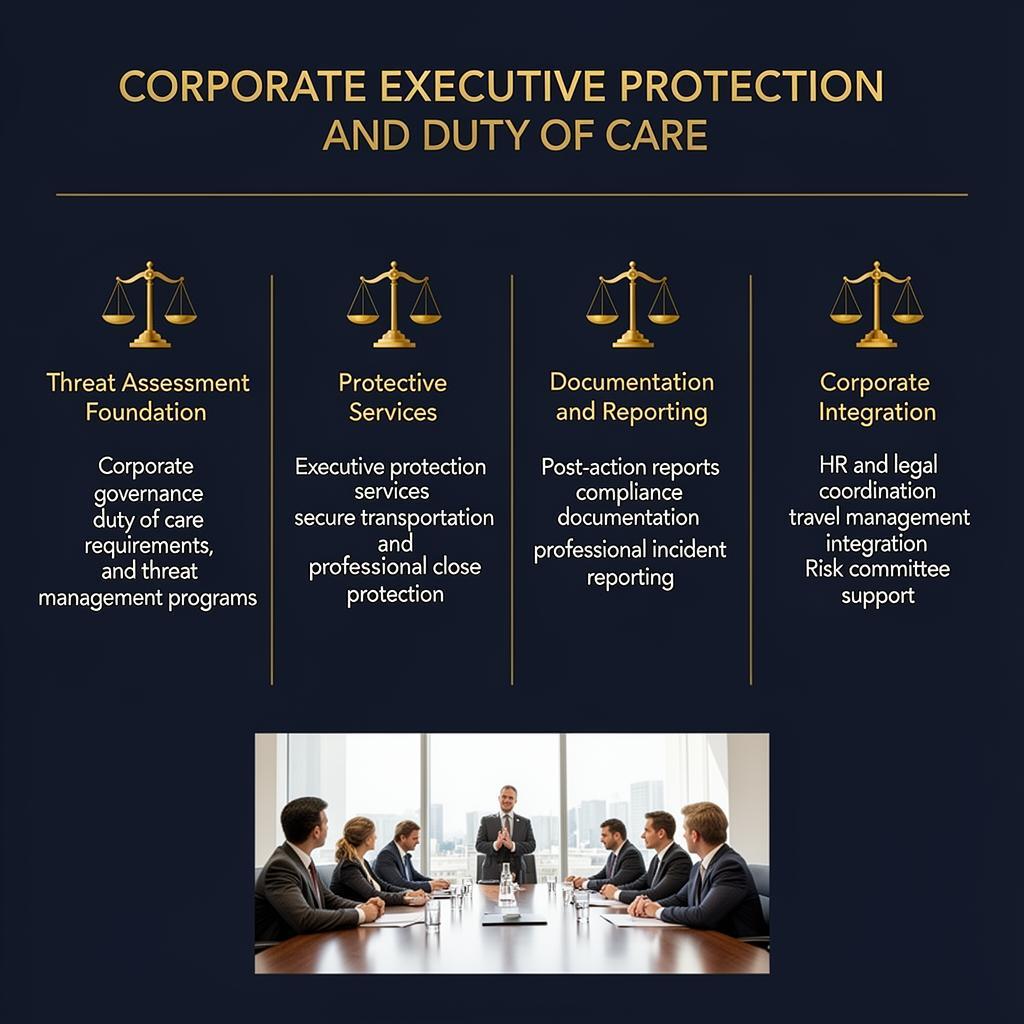
Effective corporate executive protection programs include:
1. [Threat Assessment](/threat-assessment-services) Foundation
- Executive threat assessments for protected individuals
- Monitoring of threats to the organization and leadership
- Regular reassessment as threat landscape evolves
2. Protective Services
- Close protection for appropriate threat levels
- Secure transportation programs
- Residential security coordination
- Travel security planning
3. Documentation & Reporting
- Threat incident tracking and reporting
- Program effectiveness metrics
- Quarterly board-level summaries
- Duty of care compliance documentation
4. Integration with [Corporate Security](/corporate-security-services)
- Seamless coordination with existing security teams
- Aligned protocols and communication
- Shared intelligence and situational awareness
- Clear escalation procedures
Program Governance
Executive protection programs require clear governance:
Policy Framework
- Who receives protection and under what circumstances
- How protection levels are determined
- Decision-making authority for program changes
- Resource allocation
Oversight Structure
- Board committee oversight (typically Compensation or Risk)
- Regular program reviews
- External assessments and benchmarking
- Executive input and feedback
Quantifying Executive Protection
Boards need metrics that demonstrate program value:
- Threat incidents identified and mitigated
- Response time performance
- Travel security coverage
- Program effectiveness assessments
The CFO Question: Justifying Investment
Executive protection represents significant investment. Justification considerations:
- Risk Mitigation: Protecting irreplaceable human capital
- Business Continuity: Ensuring executive availability
- Liability Reduction: Demonstrating duty of care compliance
- Talent Attraction: Security as an executive benefit
- Reputational Protection: Avoiding incidents that damage the organization
Implementation Considerations
When implementing corporate executive protection:
- Assessment Phase: Understand threats and requirements
- Program Design: Develop comprehensive protection architecture
- Provider Selection: Choose partners with corporate experience
- Integration: Align with existing security infrastructure
- Documentation: Establish reporting and governance frameworks
Getting Started
If your organization is evaluating executive protection, we work with boards, general counsel, and security leadership to develop programs that satisfy duty of care requirements while providing effective protection for key executives.