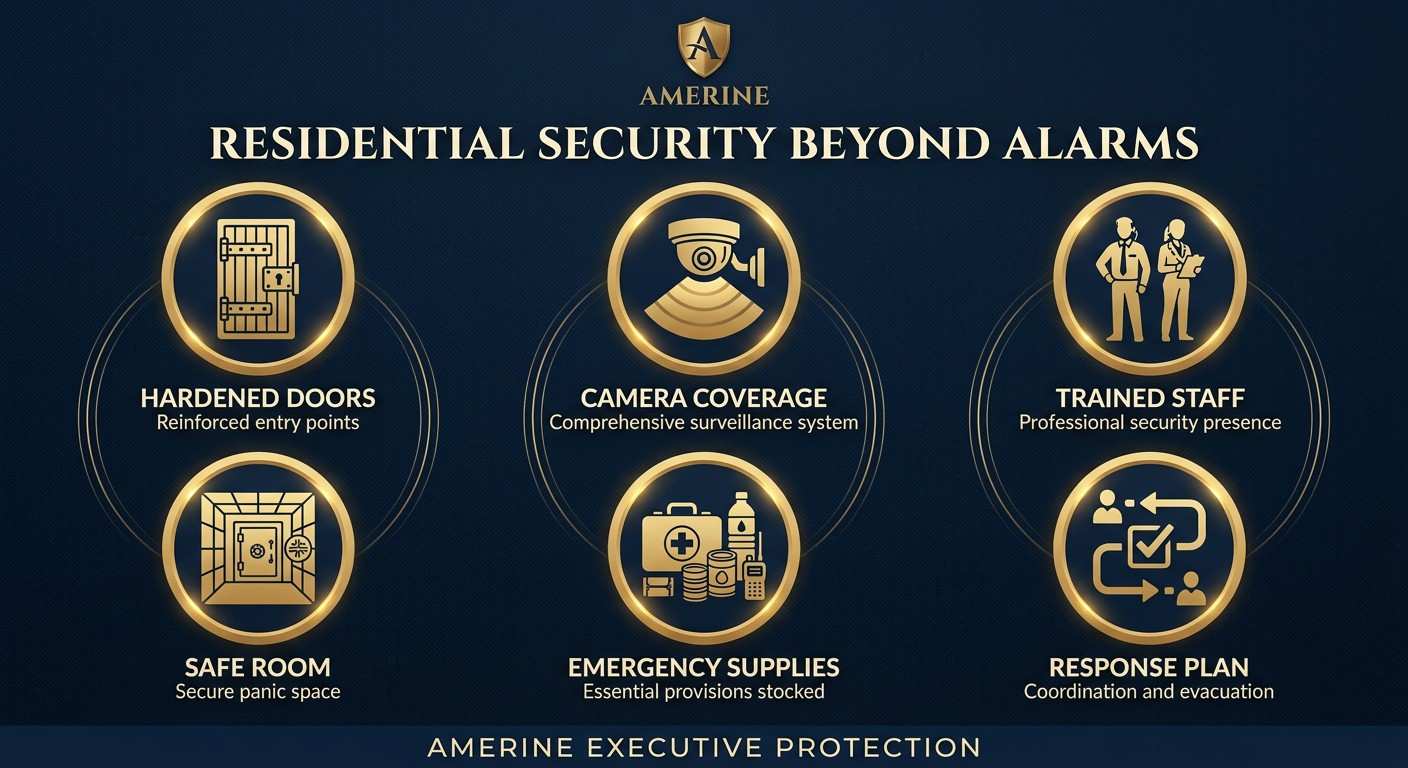
Residential Security for High-Net-Worth Homes: Beyond Basic Alarm Systems
For UHNW families, home should be a sanctuary. Yet standard security measures—even sophisticated alarm systems—fall short of providing comprehensive protection. True residential security integrates personnel, technology, and procedures into a seamless protective envelope.
The Limitations of Technology-Only Security
While alarm systems, cameras, and access control provide important layers of protection, they have inherent limitations:
- Reactive Nature: Alarms notify after a breach occurs
- Response Delays: Law enforcement response times vary significantly
- No Judgment: Technology cannot assess threats or make real-time decisions
- Insider Threats: Systems can be compromised by those with access
- False Sense of Security: Sophisticated adversaries can defeat technical measures
The Integrated Security Model
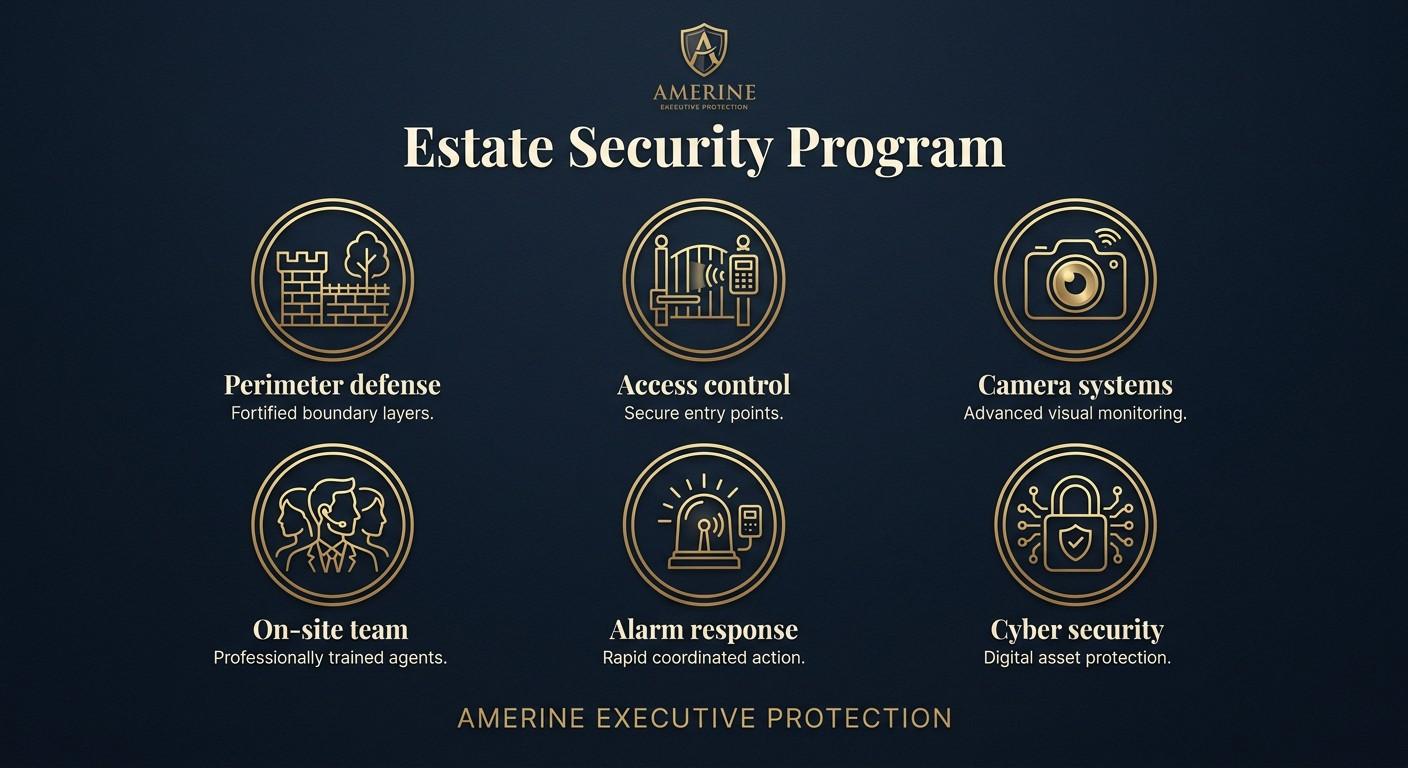
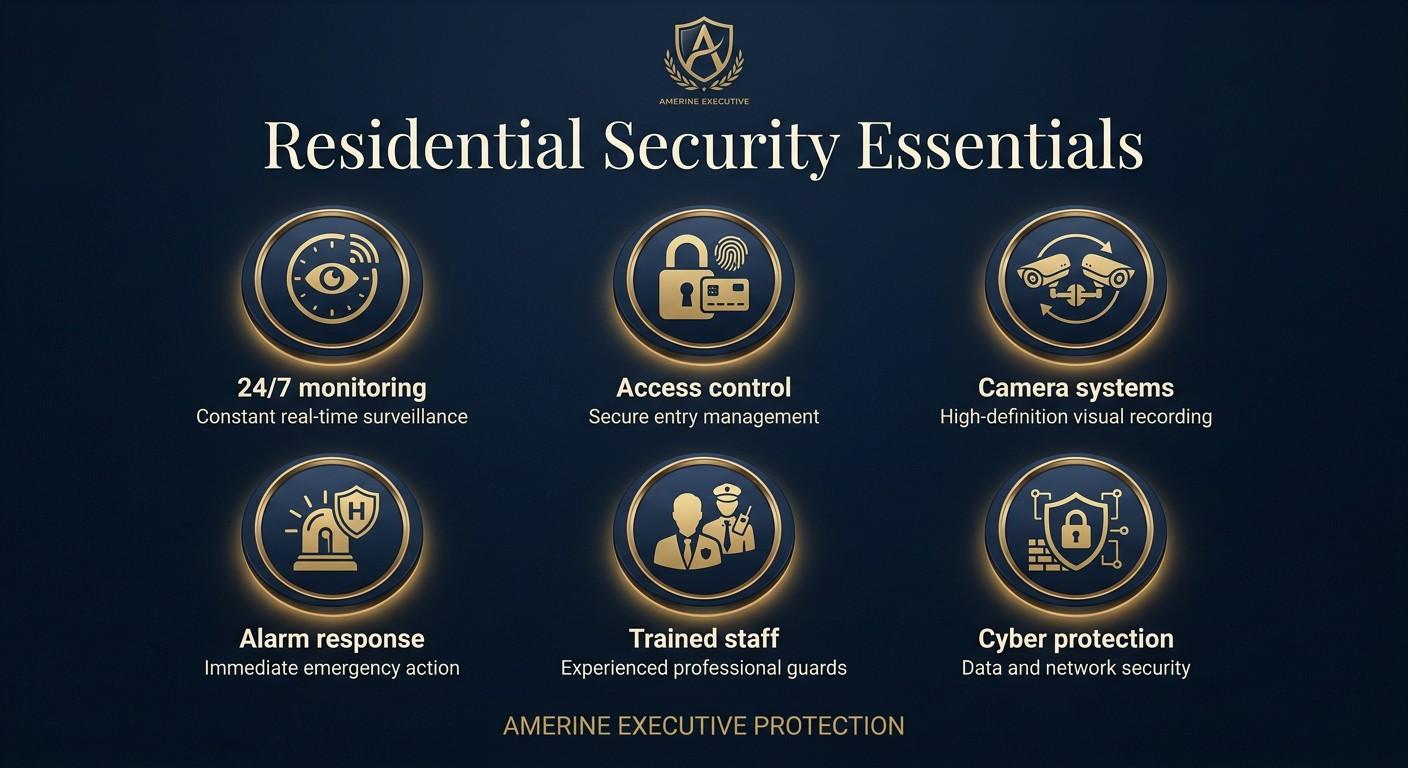
Comprehensive residential security combines multiple elements:
1. Professional Guard Services
Trained security personnel provide:
- 24/7 physical presence and deterrence
- Real-time threat assessment and response
- Access control and visitor management
- Emergency response coordination
- Patrols and security monitoring
2. Technical Systems
Technology amplifies personnel effectiveness:
- Surveillance cameras with intelligent analytics
- Intrusion detection systems
- Access control for entry points
- Environmental monitoring
- Secure communication networks
3. Procedural Controls
Protocols ensure consistent security:
- Visitor screening and management
- Delivery and contractor procedures
- Emergency response plans
- Staff security training
- Information security protocols
Selecting Residential Security Personnel
The quality of guard personnel is paramount. Key considerations:
Vetting and Background
- Comprehensive background investigations
- Previous security experience and training
- Psychological suitability assessment
- Drug screening and ongoing monitoring
Professional Standards
- Appropriate appearance and demeanor
- Strong communication skills
- Cultural fit with household
- Discretion and confidentiality
Training and Capabilities
- Emergency medical response
- Fire safety and evacuation
- Threat recognition and response
- Customer service orientation
Multi-Residence Considerations
UHNW families often maintain multiple properties:
- Consistent security standards across locations
- Centralized management and oversight
- Coordinated communication and protocols
- Flexible staffing for seasonal usage
Integrating with Household Staff
Security must work harmoniously with:
- Estate managers and household staff
- Nannies and childcare providers
- Personal assistants
- Contractors and service providers
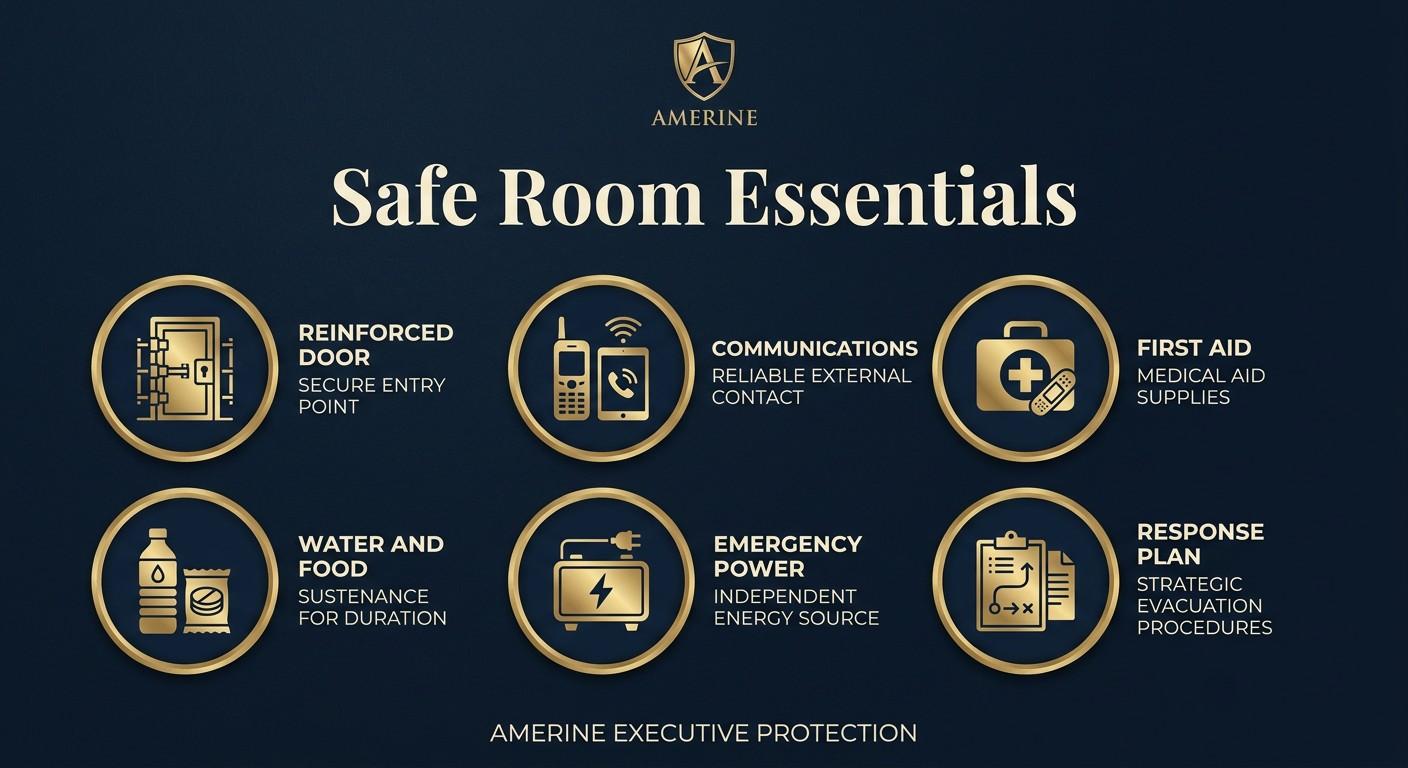
Emergency Preparedness
Comprehensive residential security includes:
- Fire and evacuation planning
- Medical emergency response
- Shelter-in-place protocols
- Communication with family and security operations
- Coordination with first responders
Security Assessment: The Starting Point
Before implementing a residential security program:
- Vulnerability Assessment: Identify physical and procedural weaknesses
- Threat Analysis: Understand relevant threats to the family
- Risk Prioritization: Focus resources on highest-impact improvements
- Implementation Roadmap: Phased approach to security enhancements
Investment Considerations
Residential security investments should consider:
- Personnel
- Technology systems and maintenance
- Ongoing training and development
- Regular assessments and updates
Protecting Your Sanctuary
Your home should provide safety and comfort. If you're evaluating your residential security posture, our team provides comprehensive assessments and implementation services for UHNW families across the country.