Why Estate Security Is Different from Home Security
For most homeowners, home security means an alarm system, a few cameras, and maybe a smart lock. That setup leaves dangerous gaps for a UHNW principal or a family office. An estate security program builds a layered defense around the particular principal, property, and threat profile. Its job is to anticipate, deter, detect, delay, and respond when needed.
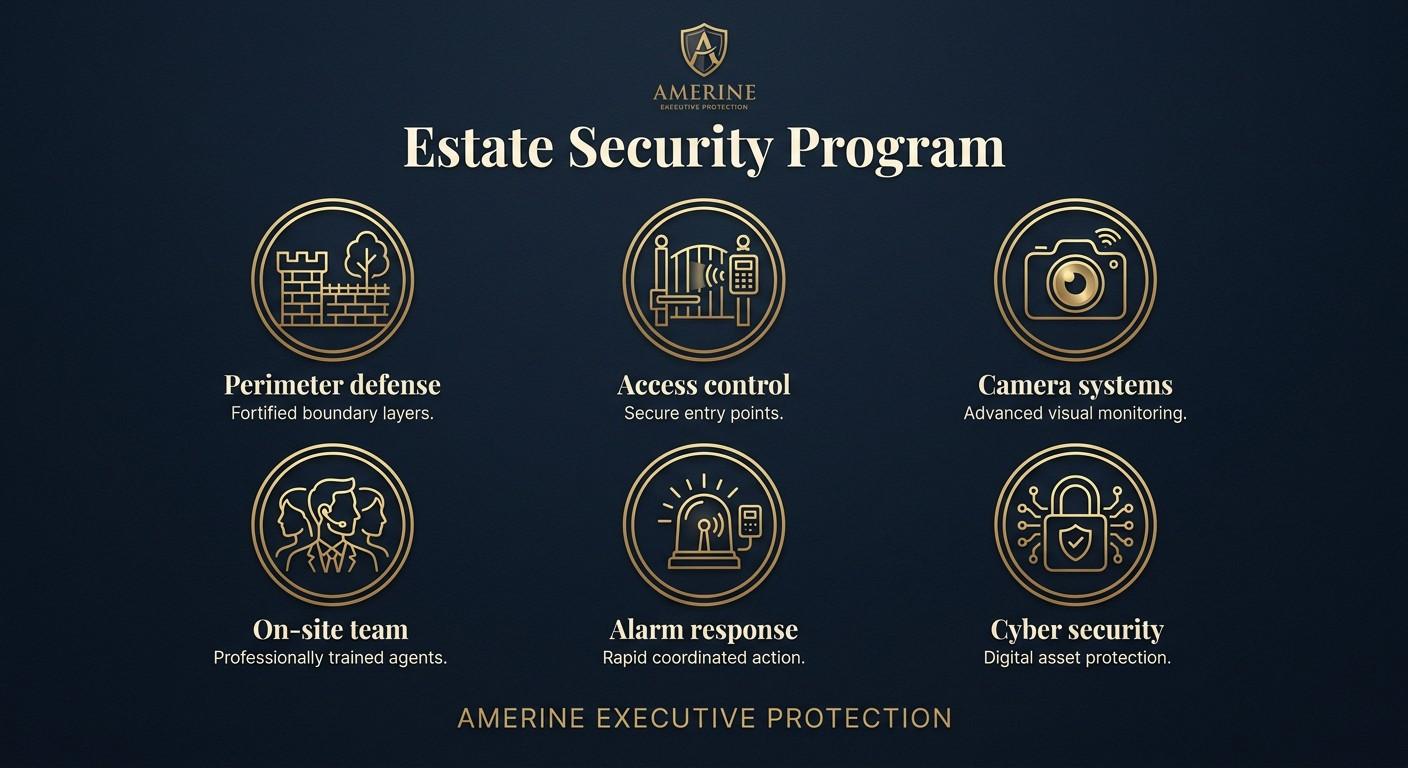
This guide covers the five pillars AMERINE uses to build serious estate programs.
Pillar 1: Perimeter Defense
Security starts at the property line. A practical perimeter includes:
- Fencing and walls matched to the threat profile rather than aesthetics alone.
- Vehicle barriers at the primary approach when warranted.
- Plantings and grounds layout that eliminate concealment and improve natural surveillance.
- Exterior lighting positioned for deterrence and camera performance.
A well-built perimeter buys time. Time is the single most valuable asset in any incident.
Pillar 2: Access Control
With an estate’s perimeter defined, you must control every entry point: pedestrian, vehicle, service, and delivery access. In practice, access control includes:
- Vetted gate procedures and a documented visitor management process.
- Credentialing for staff and recurring vendors.
- Background-checked vendor lists with annual revalidation.
- Documented protocols for deliveries, contractors, and emergency services.
The most common estate failure point is not the gate. It is the people allowed through it.
Pillar 3: Surveillance and GSOC Monitoring
Cameras only matter if someone watches them and acts on what they see. A serious estate program includes:
- A purpose-designed CCTV system covering the perimeter, approaches, entries, and interior choke points.
- Off-site Global Security Operations Center (GSOC) monitoring with documented response protocols.
- Intrusion detection integrated directly with the GSOC rather than a standalone local alarm panel.
- Recorded footage retained per policy and reviewable on demand.
Owner-monitored cameras viewed on a phone are not a security program. They are a hobby.
Pillar 4: Residential Agents
On-site residential agents turn a system into a program when the threat picture warrants their presence. Their core responsibilities include:
- Conducting documented patrols and post coverage.
- Vetting visitors and deliveries in person.
- Monitoring surveillance feeds locally and coordinating with the GSOC.
- Providing an immediate response capability without waiting for outside help.
- Serving as the on-site point of contact for the family and household staff.
Residential agents should be vetted to executive-protection standards, not standard security guard standards.
Pillar 5: Emergency Response
The final layer is what happens when something goes wrong. A real program includes:
- Documented response plans for intrusion, medical emergency, fire, severe weather, and family disturbance.
- Pre-coordinated relationships with local law enforcement.
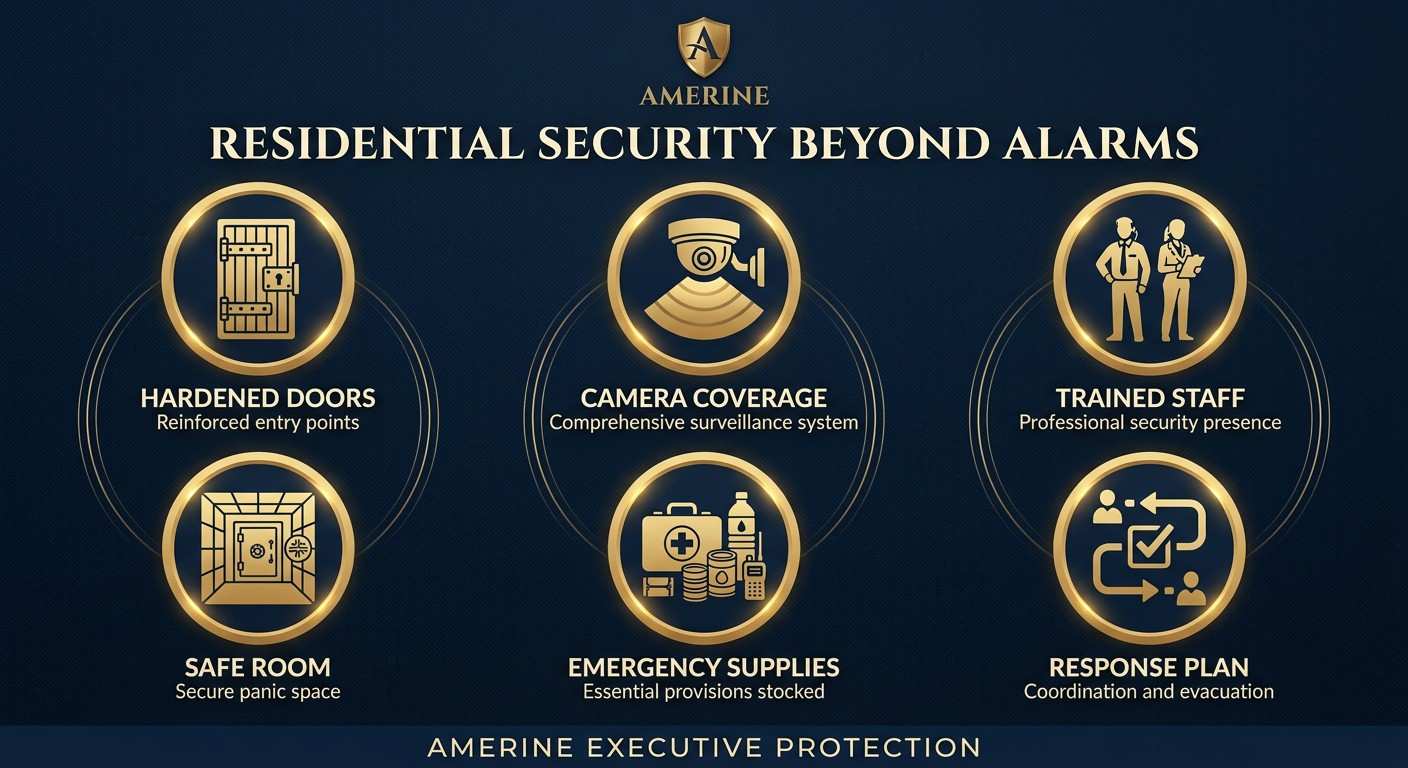
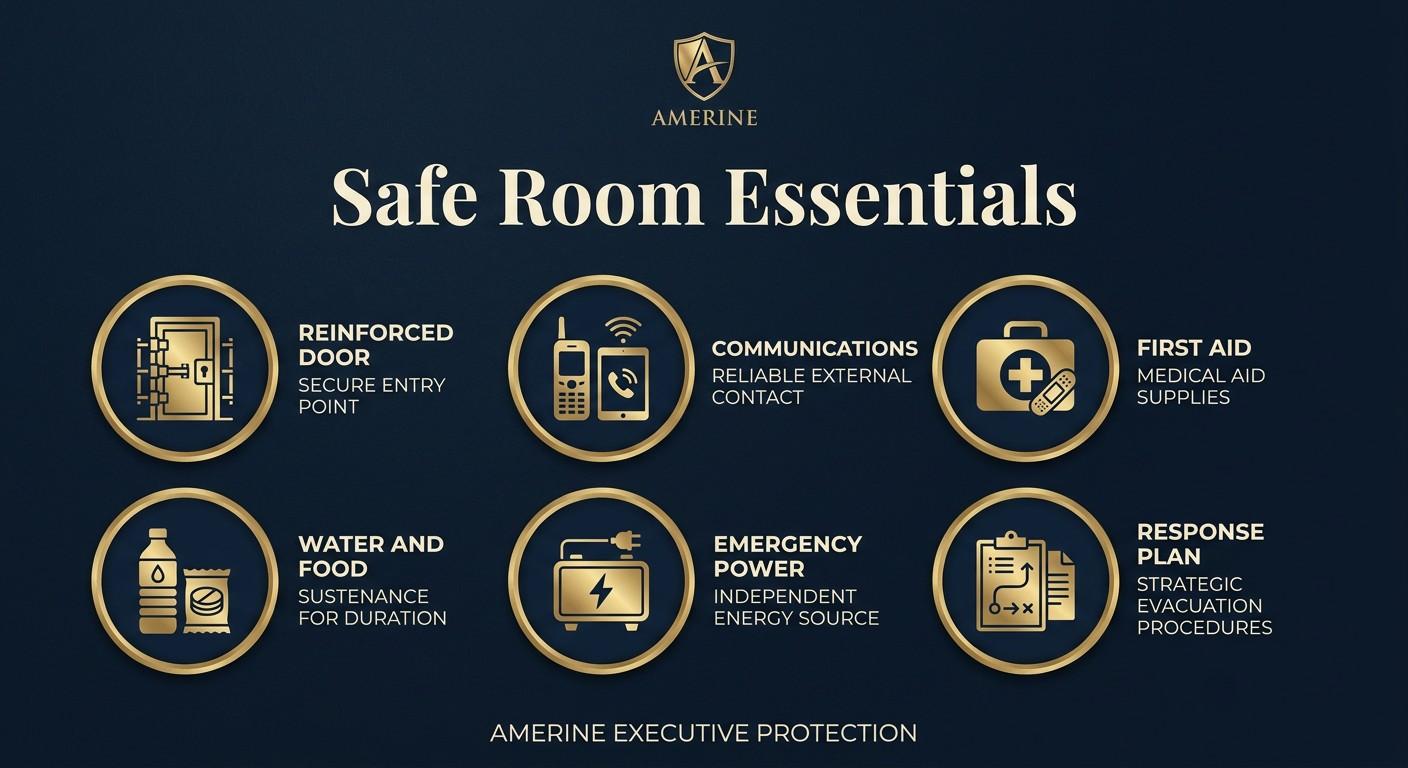
- A defined safe room or shelter location with hardened entry, communications, and supplies.
- Quarterly drills with household staff and family members.
If you have never run a drill, you do not have a plan. You have a wish.
How AMERINE Designs Estate Programs
A written threat and vulnerability assessment comes first in every estate program and sets the direction for its design. That design then determines the technology, staffing, and operating procedures. We don’t start by proposing hardware and looking for a problem it can solve.
Contact AMERINE for a confidential estate program assessment.