Executive Travel Security: Preparing for Spring International Trips
Executives and UHNW families start planning international business and leisure trips as spring approaches. That increase in travel brings both opportunities and vulnerabilities. Safe, productive trips depend on proper travel security planning.
The Pre-Travel Planning Phase
Effective executive travel security starts with a threat assessment and a digital cleanup, not just a packed bag.
- Limit who knows the itinerary: tell only the people who need dates, flights and lodging; avoid group chats or shared calendars with broad distribution.
- Lock down accounts: enable multifactor authentication on email, banking and travel accounts, and review account-recovery phone numbers and backup emails.
- Update devices before you leave: install pending OS and app updates, since unpatched software is a common entry point.
- Reduce lock-screen exposure: turn off message and email previews so a glanced-at phone does not reveal personal details.
- Plan the escalation path: decide in advance who gets called first if a phishing attempt or account takeover happens mid-trip.
- Scrub social exposure: remove home addresses, children's schools, and real-time location tags from social posts and shared travel photos.
Key Elements of Secure Travel
[Protective Intelligence](/protective-intelligence)
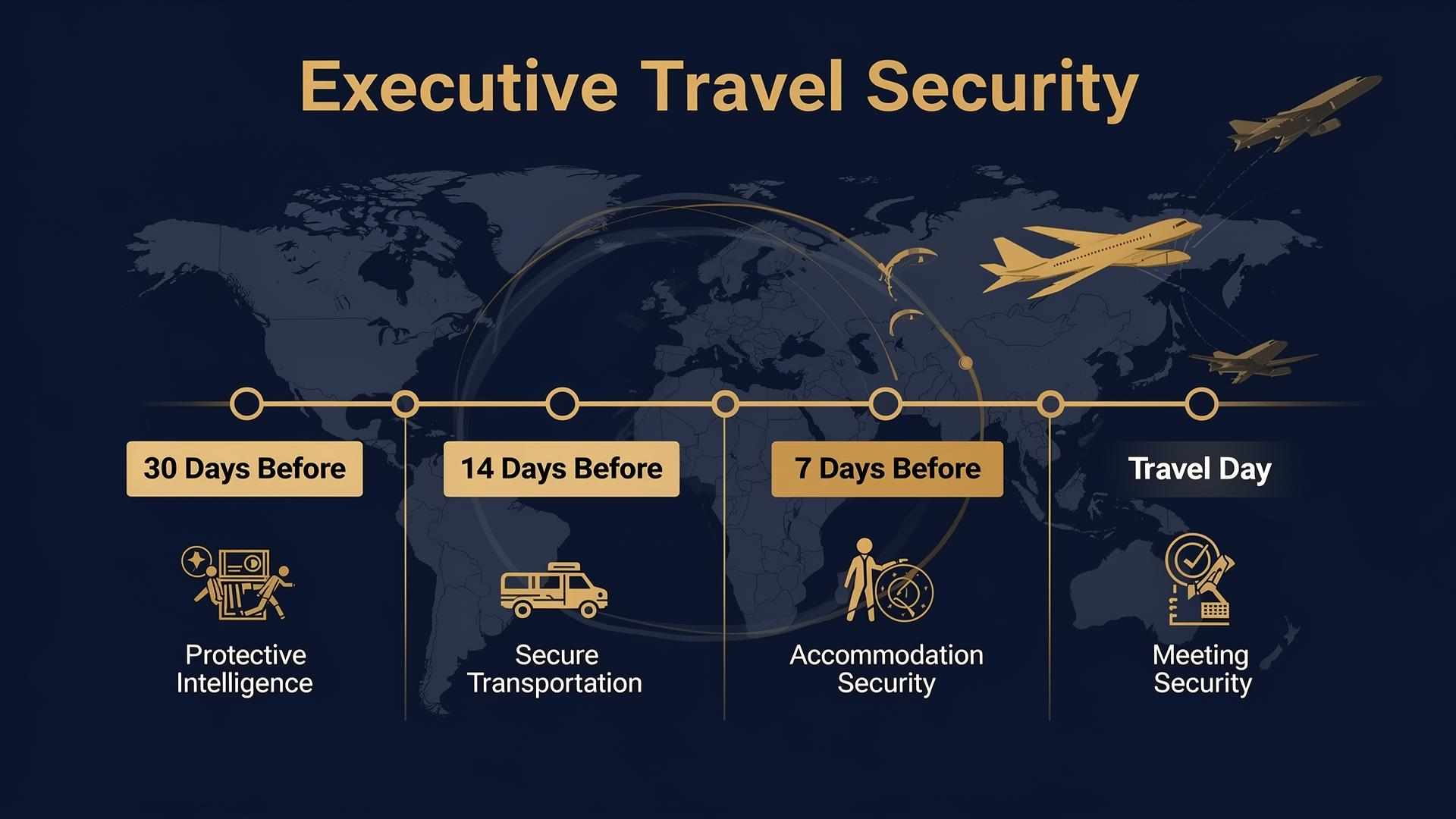
Before you leave, understand the threats at your destination. Assess political stability, crime patterns and the targeting of foreigners, along with health and medical considerations. Review recent incidents involving people with similar profiles and the security resources and capabilities available locally.
[Secure Transportation](/services/executive-transportation)
Ground transportation often carries the highest risk in executive travel. Planning covers vetted drivers with protective training, routes with alternatives, vehicle security features, real-time tracking and communication, and airport protocols and procedures.
Accommodation Security
Your choice of hotel matters, as does room security. Assess the property's security, room location and access, emergency egress plans, and staff security awareness. Include a secure communication setup in that planning.
Meeting and [Event Security](/event-security-services)
Plan specifically for business activities, including security assessments of venues and protocols for meeting room sweeps. That planning also covers access control for sensitive discussions and counter-surveillance considerations.
Regional Considerations for 2026
Skip the generalizations. Assess each leg of a multi-country itinerary with the same method:
- Check official advisories: review current travel advisories and local alerts for each destination before departure.
- Assess disruption risk: look for protest activity or route closures that could change ground movements.
- Confirm medical and communications options: identify available facilities and connectivity at each stop.
- Set reassessment triggers: define what change in conditions prompts a mid-trip itinerary review.
The Role of Executive Protection
When high-profile executives travel or threats are elevated, accompanying close protection provides constant situational awareness and immediate response capability. It also provides help finding your way locally and solving problems, privacy and schedule management, and emergency medical response.
Travel Security Checklist
Before any international trip, ensure:
Confirm that the destination threat assessment is complete, secure transportation is arranged, and hotel security is vetted. Check that emergency protocols are established, the communication plan is confirmed, and medical resources are identified. Confirm that evacuation options are understood and a 24/7 support contact is confirmed.
Planning Your Spring Travel
Planning an international trip this spring? Our team is available for comprehensive travel security planning, from destination assessments to full protective details. We tailor those services to your specific requirements and risk profile.