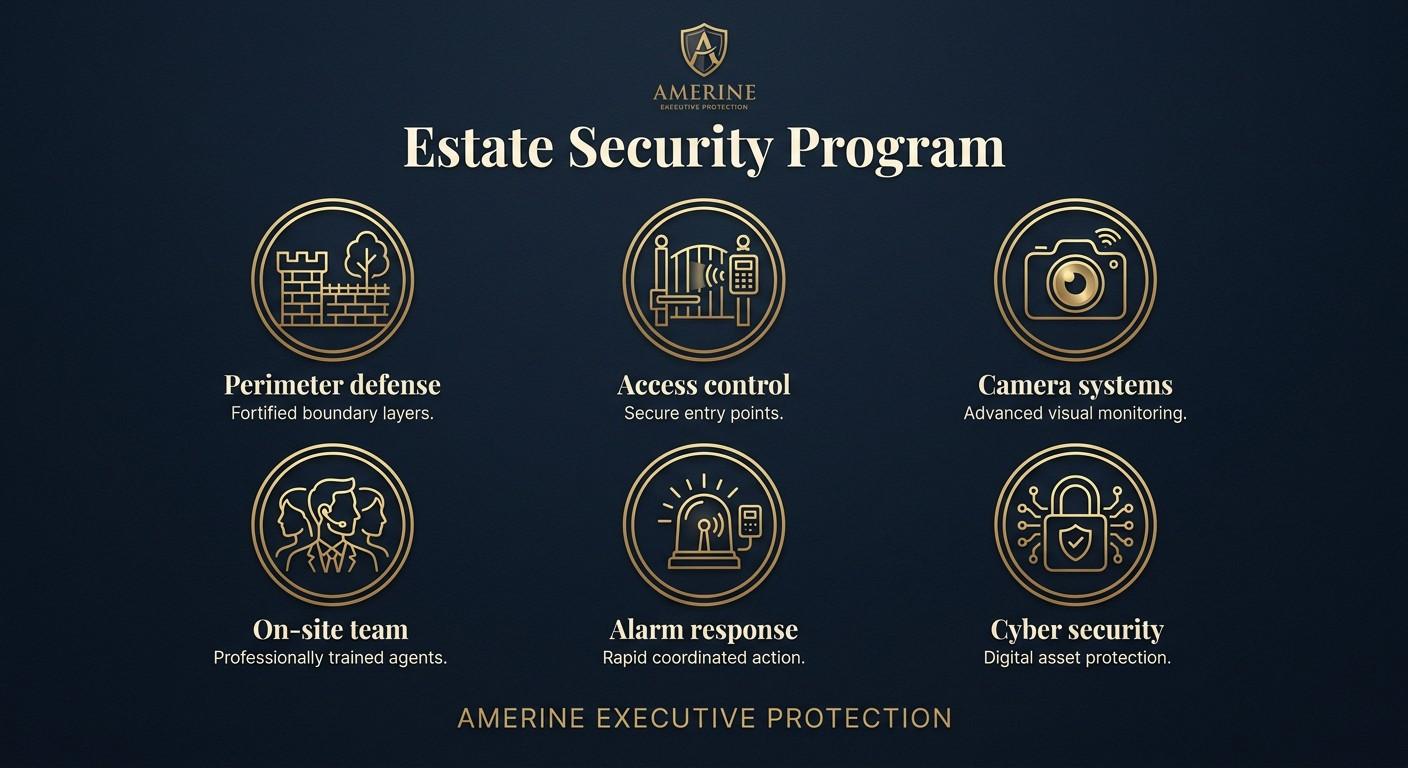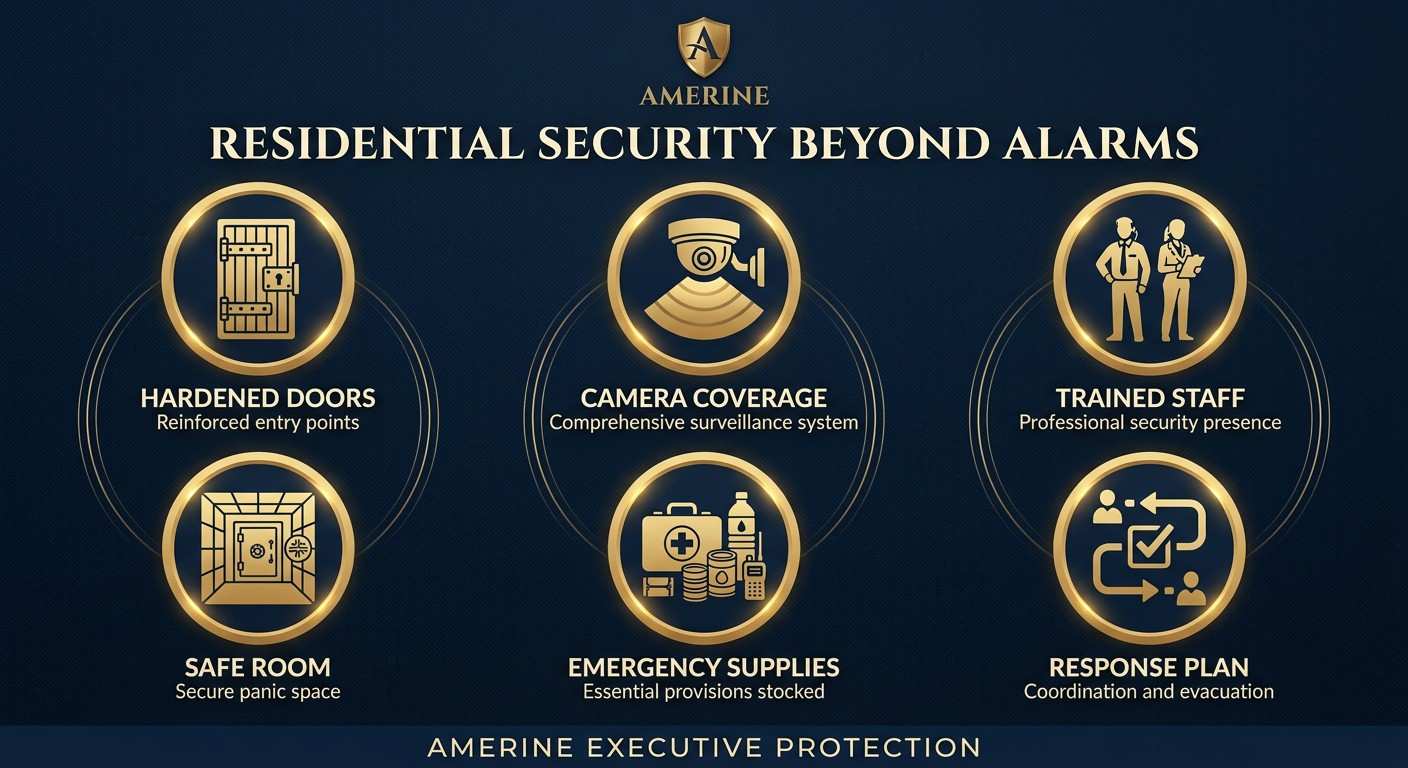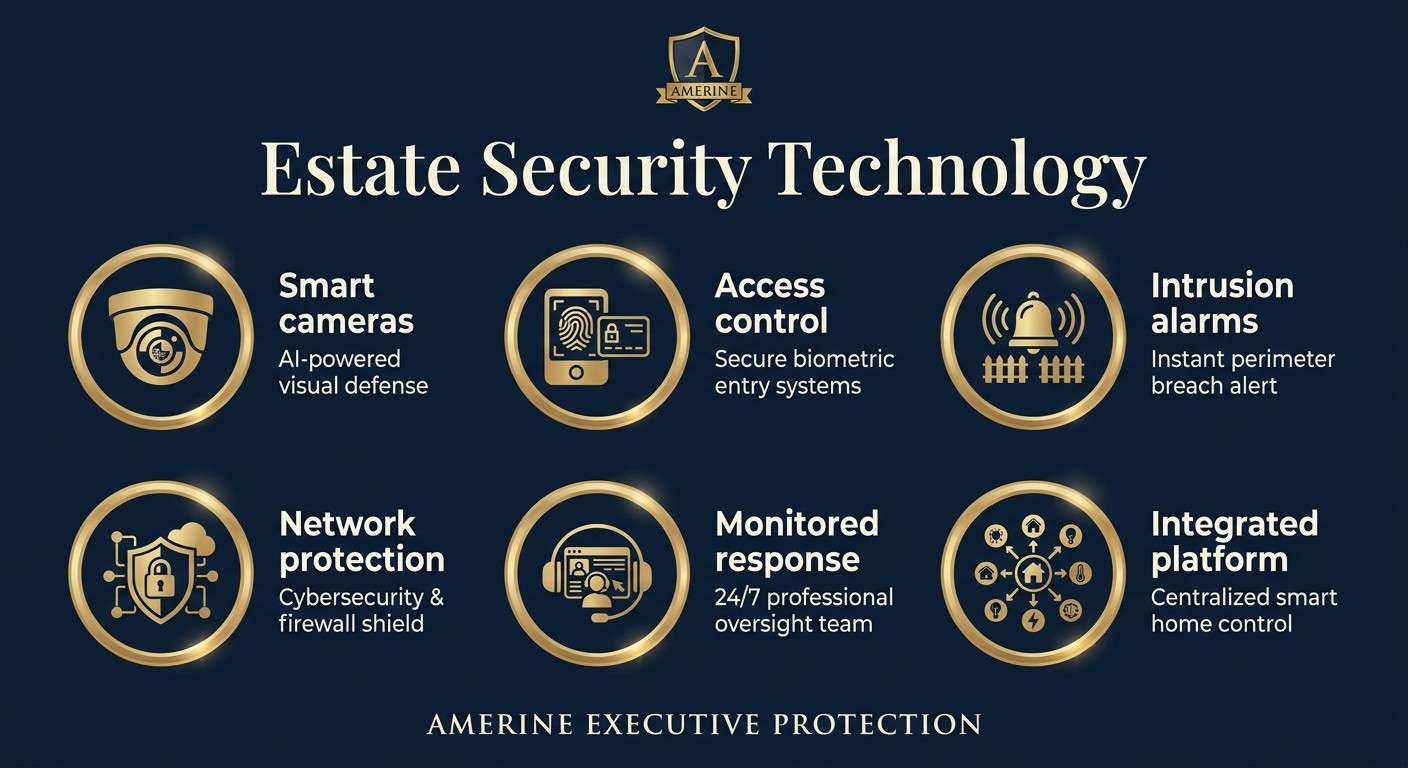
The Technology Layer of Estate Security
Technology is one pillar of effective estate security — alongside physical barriers, security personnel, and procedures. The best technology in the world is useless without trained people to monitor and respond to it, and clear protocols for what to do when an alarm triggers.
Video Surveillance (CCTV)
Camera Types
- Fixed cameras: Cover specific areas consistently (entry points, perimeter)
- PTZ cameras (Pan-Tilt-Zoom): Operator-controlled for tracking and investigation
- Thermal cameras: Detect heat signatures in darkness and through light foliage
- License plate recognition (LPR): Automatically log vehicle plates at entry points
- 360-degree cameras: Panoramic coverage reducing blind spots
Best Practices
- Cover all entry points, perimeter boundaries, and common areas
- Ensure adequate lighting for camera quality (or use thermal/IR cameras)
- Minimum 30-day recording retention (90+ days for UHNW properties)
- Redundant recording (on-site NVR plus cloud backup)
- Cyber-hardened camera systems (many consumer cameras are easily hacked)
Access Control
Entry Systems
- Biometric readers (fingerprint, facial recognition) for primary entry
- Keypad codes as backup
- Mobile credential apps for convenience
- Intercom with video for gate and door entry
- Anti-passback features to prevent credential sharing
Gate and Perimeter
- Automated gates with vehicle detection
- Pedestrian gates with separate access control
- Emergency override for fire department and medical access
- Anti-tailgating sensors
- Crash-rated barriers for high-threat environments
Perimeter Detection
Sensor Technologies
- Buried cable sensors: Detect vibration from footsteps and vehicles
- Microwave barriers: Create invisible detection zones
- Infrared beams: Break-beam detection along perimeter
- Video analytics: AI-powered motion detection with object classification
- Seismic sensors: Ground vibration detection
- Drone detection: RF scanning for unauthorized drones
Reducing False Alarms
False alarms are the enemy of effective security — they train personnel to ignore alerts. Reduce them by:
- Using analytics that distinguish humans from animals
- Environmental calibration for weather conditions
- Dual-technology sensors (requiring two triggers)
- Regular maintenance and testing schedules
Alarm and Monitoring
System Architecture
- Central alarm panel with battery and cellular backup
- Zone-by-zone monitoring for precise response
- Integration with CCTV for alarm verification
- Automated notifications to security team and homeowner
- UL-listed monitoring center with police/fire dispatch
Panic Buttons
- Hardwired panic buttons in master bedroom, kitchen, and home office
- Mobile panic devices for family members
- Silent alarm capability (no audible alert to intruders)
- GPS-enabled mobile panic for location tracking
Smart Home Integration
Modern estate security integrates with home automation:
- Lighting scenes that simulate occupancy when away
- Automated lock schedules
- Environmental monitoring (water, temperature, smoke)
- Integration with voice assistants (with security considerations)
- Remote monitoring and control via secure mobile app
Cybersecurity for Smart Homes
The more connected a home becomes, the more vulnerable it is to cyberattack:
- Separate network for security systems (never on guest Wi-Fi)
- Regular firmware updates for all connected devices
- Enterprise-grade firewall and network monitoring
- Disable unnecessary features and ports
- Regular penetration testing by qualified cybersecurity firms
Contact AMERINE for a comprehensive estate security technology assessment tailored to your property and lifestyle.