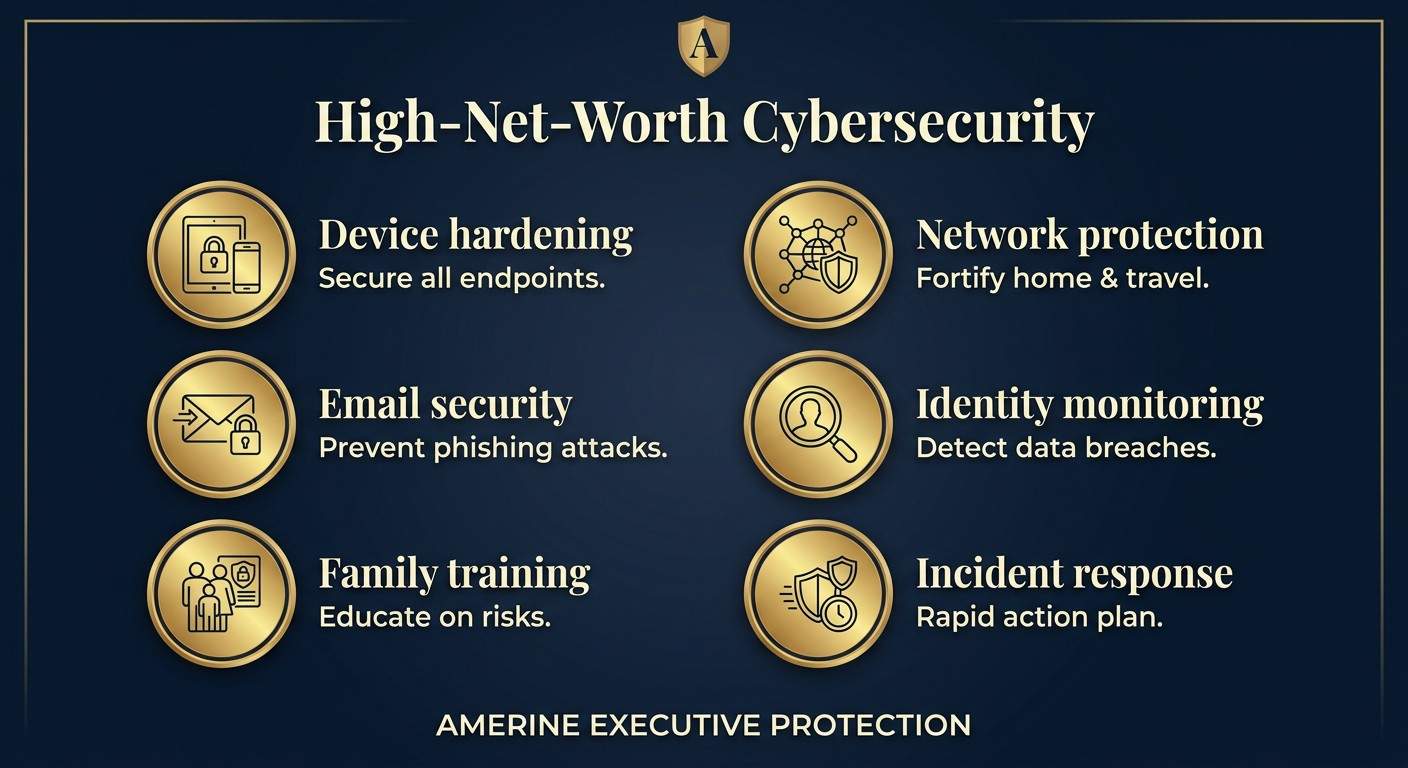
Why Wealthy Individuals Are Prime Cyber Targets
High-net-worth individuals represent lucrative targets for cybercriminals. The potential payoff from compromising a wealthy individual's accounts, identity, or personal information dwarfs what attackers can gain from targeting average consumers. And the attacks are becoming increasingly sophisticated.
Common Cyber Threats Targeting HNW Individuals
Spear Phishing
Highly personalized emails that appear to come from trusted sources — your financial advisor, attorney, family office, or even family members. These emails contain links or attachments designed to steal credentials or install malware.
SIM-Swapping
Attackers convince your mobile carrier to transfer your phone number to their device, giving them access to two-factor authentication codes for your financial accounts, email, and social media.
Business Email Compromise
Attackers impersonate business associates — real estate agents, wealth managers, attorneys — and redirect wire transfers or gain access to financial information.
Social Engineering
Using publicly available information (social media, property records, corporate filings) to build a profile that enables identity theft, account takeovers, or physical security breaches.
Data Broker Exposure
Your personal information — home address, phone numbers, family members, estimated net worth — is available for purchase from hundreds of data brokers.
Essential Digital Security Measures
Device Security
- Use a password manager (not the same password everywhere)
- Enable hardware security keys (YubiKey) for critical accounts
- Keep all devices updated with latest security patches
- Use encrypted communication apps for sensitive conversations
- Avoid public Wi-Fi or use a VPN when traveling
Account Security
- Enable multi-factor authentication on all accounts
- Use unique, complex passwords for every account
- Set up account alerts for login attempts and transactions
- Regularly review authorized devices and sessions
- Consider separate email addresses for financial, personal, and public use
Privacy Management
- Conduct regular data broker opt-out campaigns
- Remove personal information from public databases
- Monitor your name and family members on Google Alerts
- Review and restrict social media privacy settings
- Be cautious about what information you share publicly
Home Network Security
- Enterprise-grade firewall and network monitoring
- Separate networks for IoT devices, guests, and personal use
- Regular security audits of connected devices
- Encrypted Wi-Fi with strong passwords
- Consider network monitoring services
Travel Device Security
- Use dedicated travel devices with minimal data
- Encrypt all devices with strong passwords
- Use VPN for all internet access while traveling
- Be aware of hotel Wi-Fi and business center risks
- Consider burner phones for high-risk destinations
Family Digital Security
Children and Social Media
- Age-appropriate privacy settings and monitoring
- Education about oversharing location and personal information
- School directory opt-outs for contact information
- Gaming platform privacy settings
Household Staff
- NDA requirements covering digital information
- Restrictions on photographing the home interior
- Social media policies regarding the family
- Device policies in sensitive areas of the home
Incident Response
If you suspect a digital security breach:
- Change passwords on all critical accounts immediately
- Contact your financial institutions to flag accounts
- Engage a cybersecurity incident response firm
- File reports with the FBI's IC3 and local law enforcement
- Monitor credit reports and consider credit freezes
Contact AMERINE for a comprehensive digital security assessment that coordinates cyber protection with your physical security program.