A Target-Rich Environment
Along with excitement, visibility, and opportunity, World Cup travel brings a target-rich environment for scams, theft, cyber exposure, impersonation, and reputation risk.
Protective intelligence helps travelers move through that environment with better information and fewer surprises.
Ticket and Travel-Document Scams Are Already a Concern
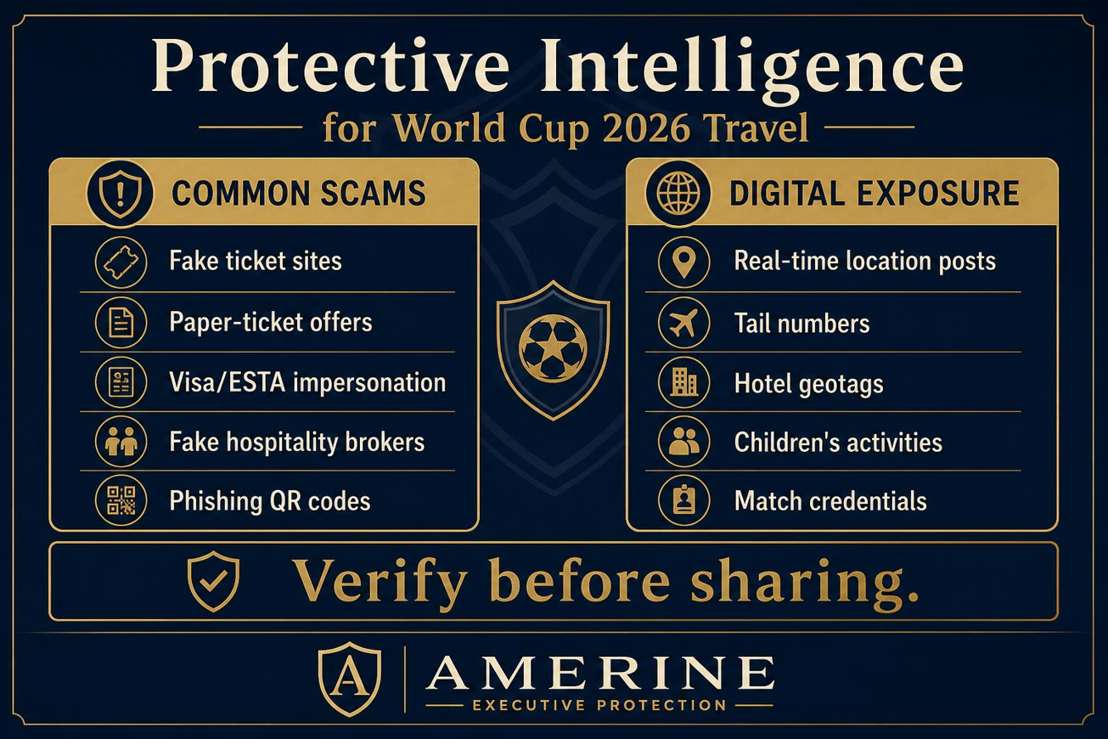
Watch for copycat websites, social media ticket offers, fake ticket sellers, and offers of paper tickets or screenshots, the FTC has warned World Cup travelers. According to the agency, most tickets will arrive electronically through the FIFA app. Anyone selling paper tickets or screenshots is likely a scammer.
Scammers may build websites that resemble official State Department pages. That's why the FTC has also warned foreign travelers to use official government sources for visas, passports, ESTA, and other travel documents.
For executives, families, and corporate travelers, a ticket or travel-document scam can cost more than money. It can also expose passport data, phone numbers, email addresses, payment details, itineraries, and family-member information.
Verify Before Sharing Personal Information
World Cup travelers should be cautious with:
- Ticket sellers outside official channels
- Unsolicited hospitality offers
- "VIP access" packages from unknown brokers
- Fake visa or ESTA assistance sites
- Hotel booking links sent by message
- Driver or concierge requests for passport photos
- QR codes posted in public or sent through social channels
- Social media accounts claiming to represent teams, sponsors, or event officials
A simple rule applies: verify the source before providing money, documents, identity information, or itinerary details.
Digital Exposure Can Become Physical Exposure
High-profile travelers often unintentionally create risk through what they post. Real-time hotel locations, suite views, travel routes, children's activities, restaurant reservations, aircraft tail numbers, or match-day credentials can help strangers identify their movements.
Include a social media plan in your World Cup travel preparations. Families and executive teams should agree on which accounts are public, who can tag the traveler, how to handle suspicious messages, and what to hold off posting until after the event.
Protective Intelligence Is Not Alarmism
Collecting information, assessing it, and acting on it through a structured process is protective intelligence when that information may affect a traveler's safety, privacy, or schedule. For a World Cup trip, this can include:
- Protest and demonstration monitoring
- Local crime and hotel-area awareness
- Weather and heat considerations
- Airport and transportation disruption monitoring
- Scam and impersonation tracking
- Cyber and device-hygiene guidance
- Public-profile and social media review
- Medical and emergency-resource awareness
The objective is simple: reduce uncertainty.
Corporate Groups Need a Different Plan
Different schedules can make a corporate delegation complicated to manage, with executives, spouses, clients, board members, sponsors, and guests all potentially moving separately. The protection plan should spell out who's covered, who makes decisions, which events are mandatory or flexible, and how the group communicates when plans change.
AMERINE's Protective-Intelligence Approach
For World Cup travel, AMERINE's protective intelligence and threat assessment services involve assessing the traveler's profile, itinerary, host city, event schedule, and likely exposure points. These services are designed to help clients identify risk before it becomes a problem.
If you're a corporate leader, family office, or high-profile traveler planning to attend FIFA World Cup 2026 matches, review your exposure, transportation, digital footprint, and contingency plans with AMERINE before you go. Contact us to arrange a confidential consultation.
---
AMERINE is not affiliated with FIFA. This article is general travel-security planning guidance and is not legal, immigration, aviation, law-enforcement, or ticketing advice.