The Shift from "Detail" to "Program"
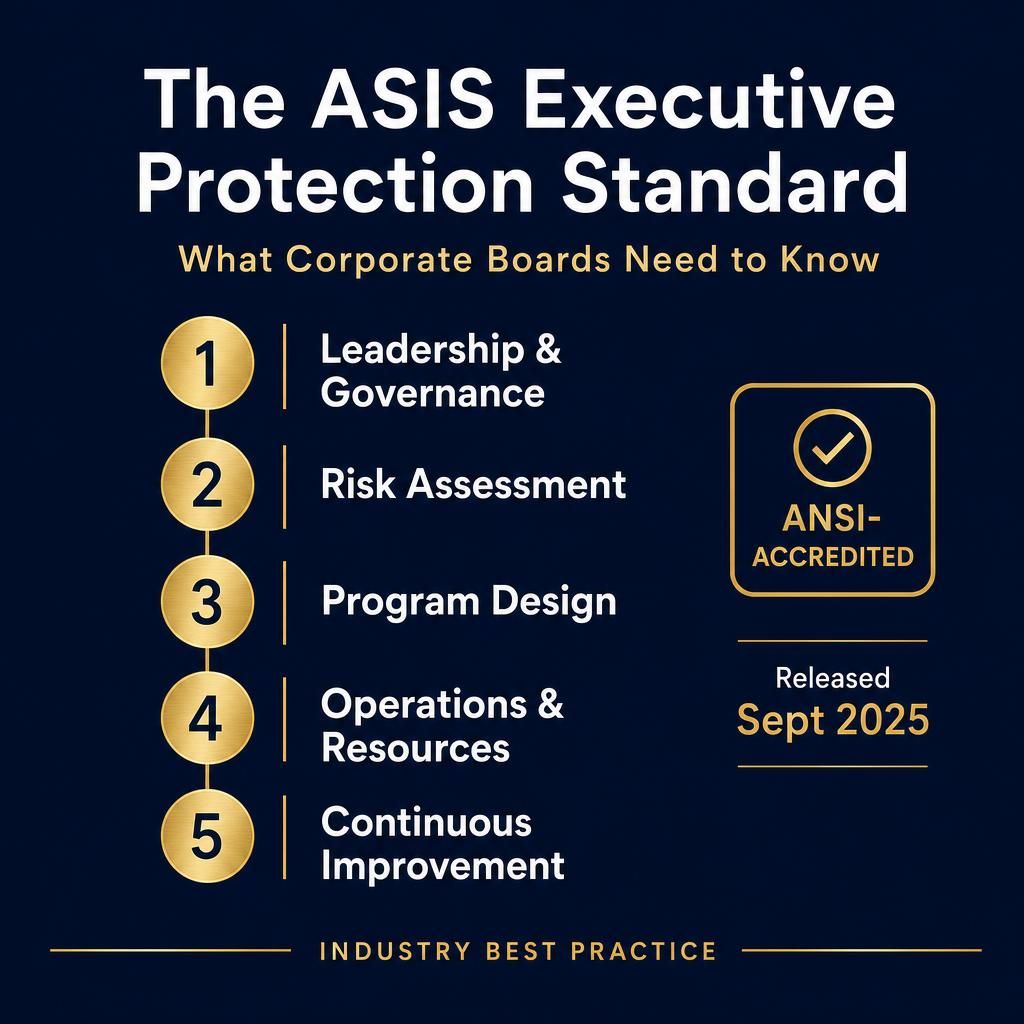
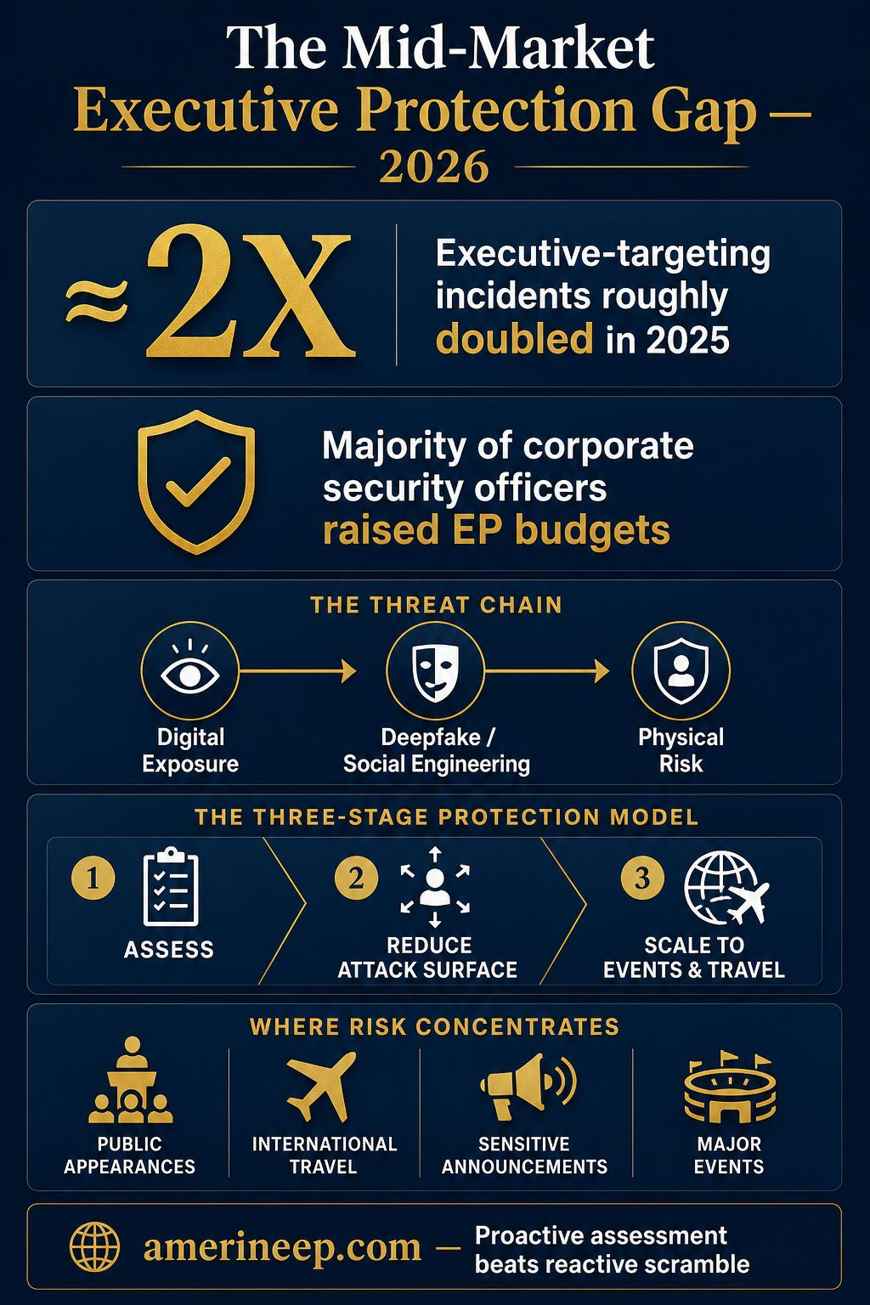
For most of the last twenty years, "executive protection" inside a corporation meant a small detail that traveled with the CEO. In 2026, that is no longer the right unit of analysis. ASIS International's research on executive protection has tracked the field's clear shift toward threat-assessment–driven programs that scale posture up and down rather than blanket-covering principals at a single level.
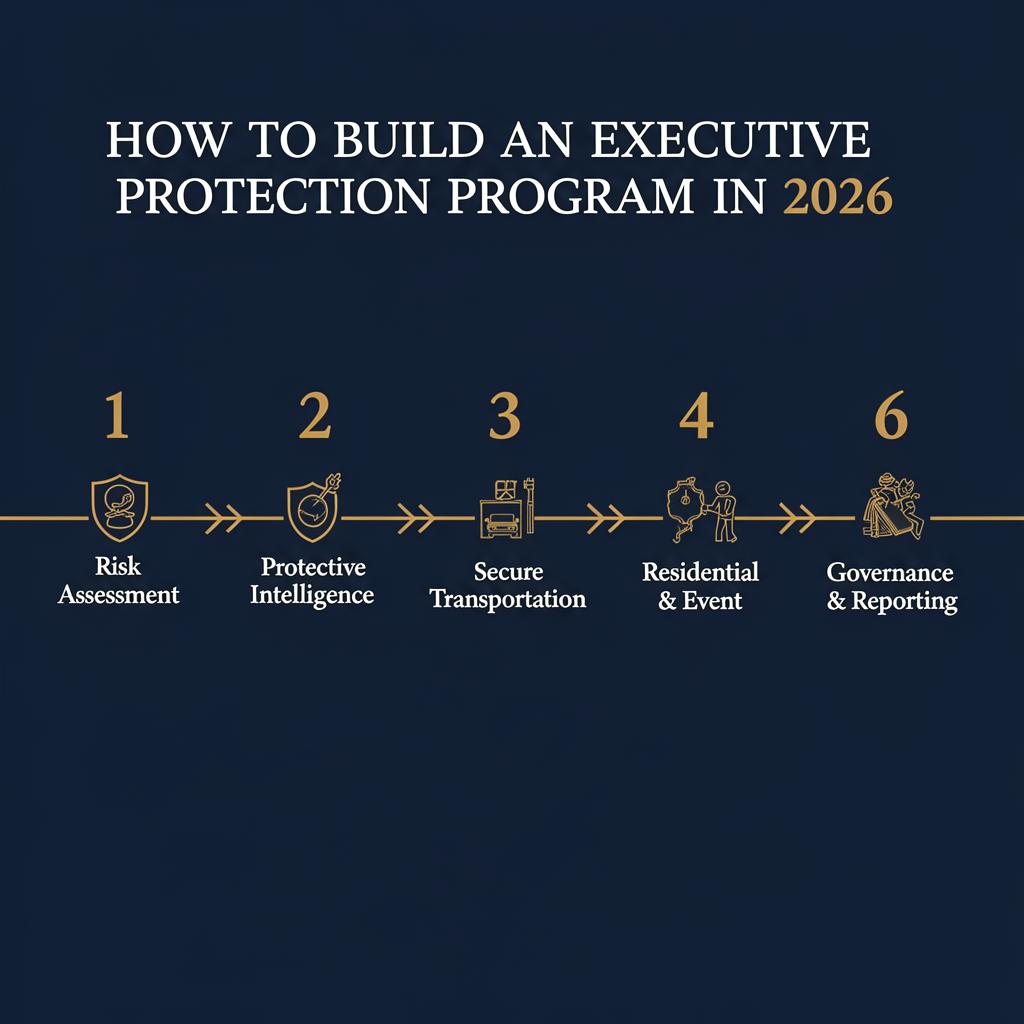
A mature program in 2026 is not a detail standing in a lobby. It is a governance structure with six working parts. This is the practical guide we share with corporate security leaders, general counsel, and CHROs who are building or maturing the program for the first time.
1. Risk Assessment — The Foundation
Everything downstream depends on a credible, current view of risk to the principal. Without it, the program oscillates between underreaction and theater.
A serviceable principal risk assessment covers:
- Principal profile: Public visibility, media exposure, recent compensation disclosure, controversial decisions, recognizable family members.
- Industry and company posture: Layoffs, regulatory action, activist campaigns, geopolitical exposure, ESG controversy.
- Geographic footprint: Headquarters, residence(s), recurring travel destinations.
- Specific threats: Documented threats received, online hostility patterns, terminated employees, contested litigation, prior incidents.
- Family exposure: Spouse, adult children, school-age children, and the staff around them.
The output is a tiered posture recommendation — not a single number — that can flex by location, event, and time.
2. Protective Intelligence — The Continuous Layer
Protective intelligence is the always-on workstream that converts open-source signals into actionable awareness. It covers:
- Monitoring of named social channels, surface and deep-web mentions, and adversarial communities for principal references.
- Doxxing monitoring and removal: data-broker scrubbing, address and phone exposure cleanup.
- Threat ingestion and triage: a defined intake from corporate communications, IR, HR, legal, and the principal's office.
- Travel-window intelligence briefs and event-specific assessments.
For most mid-cap and large-cap companies, this is a hybrid: an internal lead inside corporate security, an external intelligence partner, and an integration with the EP operations team.
3. Secure Transportation — The Highest-Frequency Risk Surface
Most days, the highest-frequency risk surface in a principal's life is the vehicle and the driver. A program-level approach defines:
- Posture by city: where vetted secure transportation is the standard, where a vetted driver-only is acceptable, where rideshare is permitted.
- Vehicle staging, inspection, and maintenance discipline.
- Driver vetting standard, training requirements, and recurring re-vetting.
- Communications protocol with the operations cell during movement.
- Contingency planning: route disruption, surveillance detection, medical, and re-routing authority.
The mistake here is buying transportation by the trip instead of building it as a program.
4. Travel Support — Domestic and International
A program-level travel function covers:
- Pre-trip: Destination intelligence, accommodations review, route planning, in-country partner activation.
- In-transit: Airport and FBO handling, secure ground, hotel arrival protocol.
- In-country: Daily run-of-show, on-call agent if posture warrants, medical and evacuation contingency.
- Family-tagalong travel: Documented standard for when family travels with the principal.
International capability is the area most often outsourced — and the area where vendor selection matters most. The right partner has its own vetted in-country operators, not a marketing slide of "global coverage."
5. Residential and Event Coverage
The residence is a fixed asset; the events are scheduled exposure. Both belong inside the program.
- Residential: Periodic security assessment of all principal residences, alarm and camera standards, panic protocol, household-staff vetting, and a documented relationship with local law enforcement.
- Events: Standardized advance work for any event with announced principal attendance — earnings, investor days, conferences, philanthropy, weddings, funerals.
A common failure mode is investing heavily in travel posture while leaving residential and event coverage to the principal's spouse and assistant.
6. Governance, Reporting, and Authority
Without governance, the program is a vendor relationship rather than a corporate function. The governance layer defines:
- Executive sponsor: Typically CHRO, GC, or CFO — the named owner inside the C-suite.
- Decision rights: Who authorizes posture changes, who approves travel exceptions, who signs off on family coverage.
- Reporting cadence: Quarterly to the audit or risk committee, with named metrics — incidents, threats triaged, travel coverage, residential assessments, training completed.
- Program structure: A corporate function, not an executive perk.
- Training and culture: Recurring briefings to the principal, family, and executive assistant. The program lives or dies on the principal's willingness to engage.
Build or Buy?
Most companies should outsource execution and own governance. A small in-house security lead (often one person, sometimes a two-person team) coordinates an external EP partner who provides operational depth, intelligence, transportation, and travel capability.
The exception is the very largest principals — billion-dollar visibility, recurring threat activity, complex international footprint — where a small captive team plus an external surge partner is the right structure.
Common First-Year Mistakes
- Buying the detail before the assessment.
- Standing up intelligence without a triage protocol — drowning in signals.
- Treating residence and events as the family's problem.
- Letting transportation become a per-trip purchase.
- No quarterly reporting up — the program loses sponsorship.
Engaging AMERINE
We build, mature, and operate corporate EP programs for public companies, private firms, and family offices headquartered in Texas and operating nationally and internationally. The engagement typically starts with a 30- to 60-day assessment, transitions to standing program operation, and includes quarterly governance reporting to the executive sponsor.
Contact us or call (281) 799-1877 to discuss your program.
---
This article is general guidance on building a corporate executive protection program and is not legal, HR, or insurance advice.