A Common Question with an Important Answer
If an event already has police officers, venue security, or hired guards, why would you still need Executive Protection? It's a common question, and the answer lies in differences in mission, training, and responsibility.
Police officers and event security teams have broad responsibilities: maintaining order, enforcing rules, managing crowds, protecting the venue, and responding to incidents. Their role is essential, and their training focuses on identifying the main threat, responding to the source of disruption, and restoring control across the larger environment. In many cases, their attention turns toward the problem, such as a fight, disturbance, protest, medical emergency, unauthorized entry, or public safety issue.
Executive Protection is different. Executive Protection is focused on the individual.
Three Different Missions
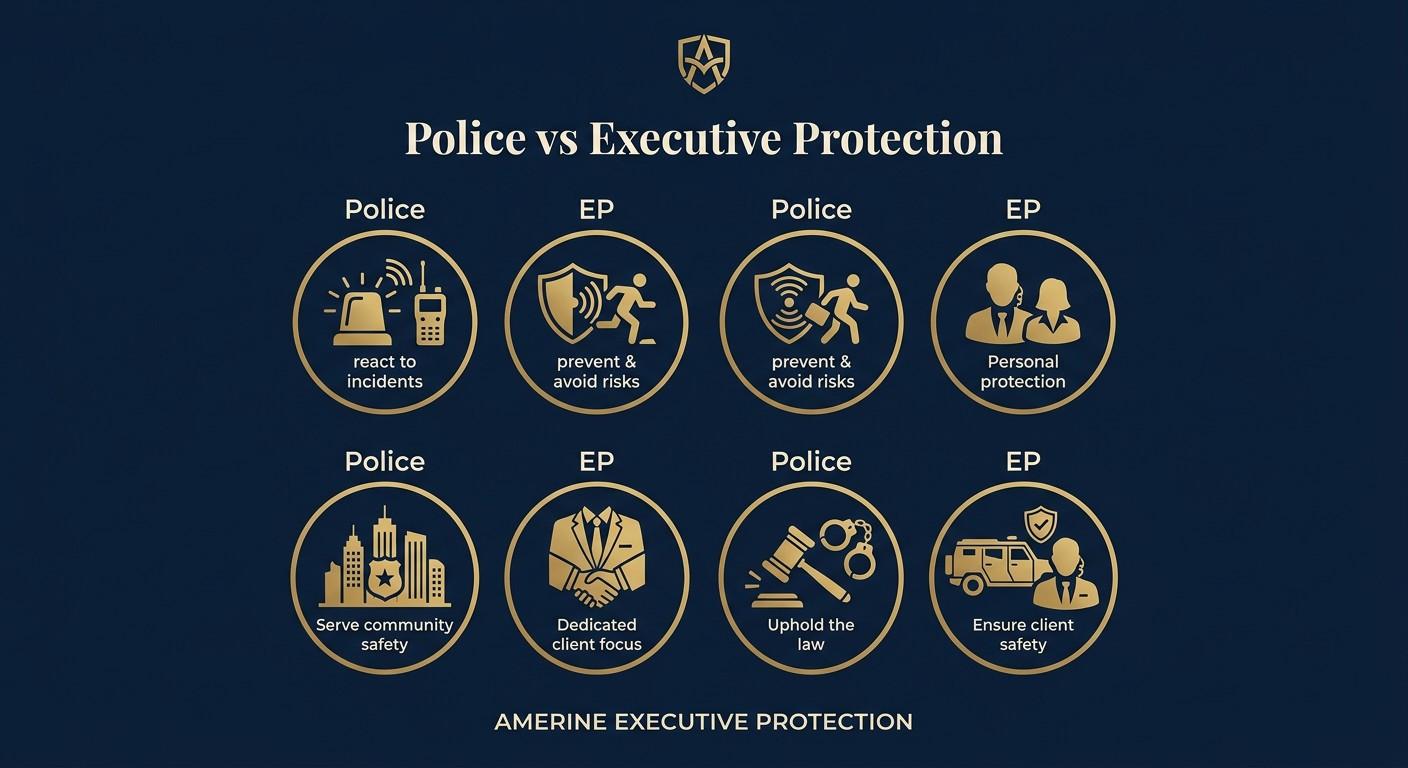
An Executive Protection detail's responsibility is to the principal, their family, and their immediate party before, during, and after an event. An EP agent is trained to move the client away from a disturbance while police or venue guards move toward it. That difference matters because the principal often becomes more exposed, visible, and vulnerable when a crowd's attention shifts to an incident. Rather than joining the general event response, the protective agent stays focused solely on the safety, movement, and well-being of the person in their care.
Police and venue staff aren't replaced by Executive Protection. Outcomes are best when all three groups coordinate while keeping their roles distinct:
| Role | Primary Responsibility | Direction of Movement |
|---|---|---|
| Law Enforcement | Public safety and legal authority | Toward the threat |
| Venue Security | Property, access, credentials, crowd flow | Holds the building |
| Executive Protection | The individual, their family, and entourage | Moves the principal away from the threat |
Public safety and legal authority belong to law enforcement. Venue security's responsibilities cover the property, access points, credentials, crowd flow, and internal procedures. For Executive Protection, the focus is the individual's safety, transportation, arrival, departure, positioning, and contingency planning.
The Question That Changes Everything
Risks can develop quickly at either a public or private event, from a surging crowd or an aggressive guest to a protest moving closer. A fire alarm can cause confusion, and a medical issue can create panic. Someone who is overly persistent, emotionally unstable, or looking for a confrontation may approach a high-profile individual.
In those moments, the question is not simply, "Is there security at the event?" The better question is:
> "Who is specifically responsible for this individual right now?"
Executive Protection answers that question clearly.
What a Professional Detail Actually Does
To prepare, a professional protection team studies the principal's schedule and habits, along with family needs, public exposure, transportation plan, and risk profile. Their review includes:
- How the individual will enter and exit the venue
- Where they will be seated and who has access to them
- What primary, secondary, and emergency routes are available
- Where vehicles are staged and how quickly they can move
- What options exist if the environment changes mid-event
- The nearest hospital, trauma center, and law enforcement liaison
General event security doesn't usually handle this level of preparation. Its responsibility covers the event as a whole, while Executive Protection is responsible for the individual attending it.
Family Protection Is a Distinct Mission
Protecting family members is another important difference. Even when a spouse, child, or close family member isn't on stage or in the spotlight, their relationship to the principal can leave them vulnerable.
For Executive Protection professionals, protecting an individual often means protecting the entire family unit. They coordinate arrivals and departures, stay aware of who's nearby, help avoid unwanted attention, and ensure family members aren't left exposed when confusion arises or during transitions.
Discretion Is Part of the Service
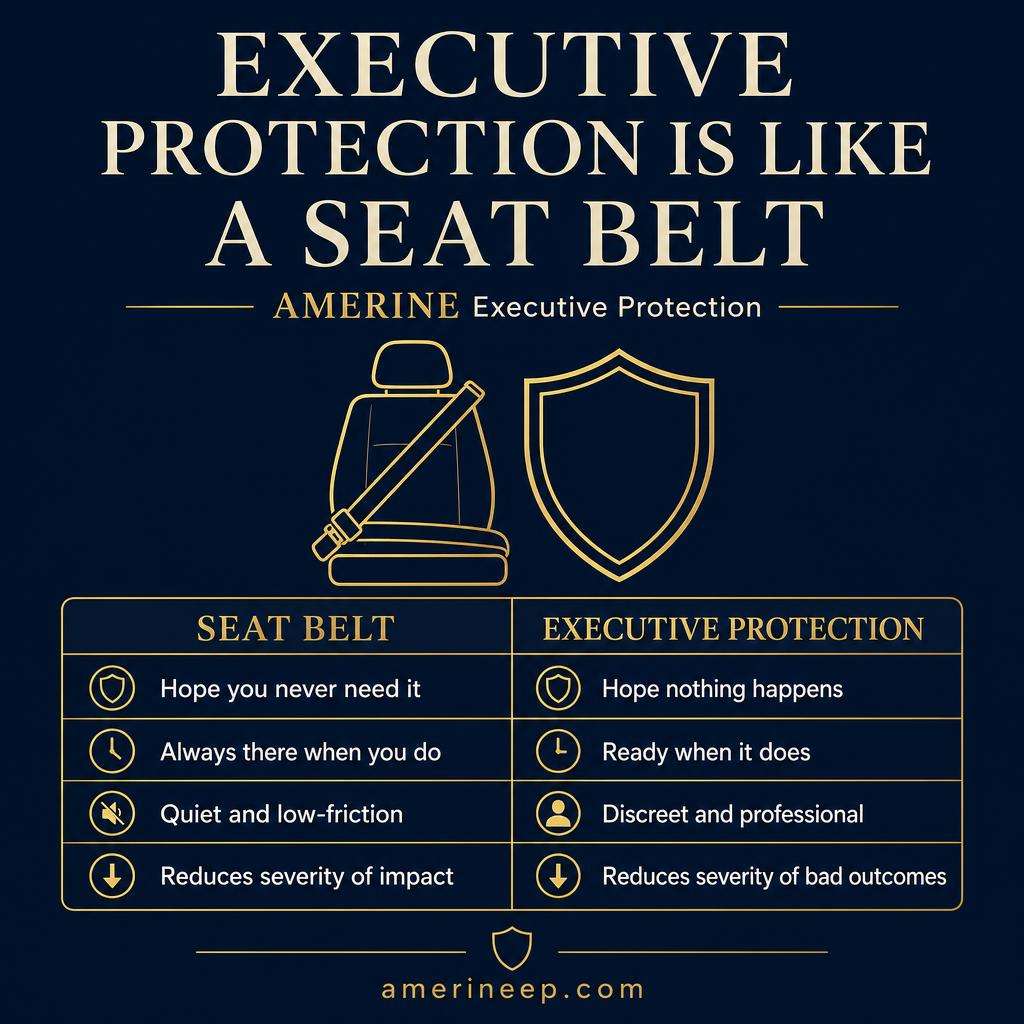
Discretion is also part of Executive Protection. A quality detail works professionally, calmly, and quietly, without aiming to create fear or attract unnecessary attention. Often, the best protection goes unnoticed. The principal can attend the event, conduct business, interact with guests, and enjoy the occasion knowing someone is actively managing safety around them.
Police Protect the Public. Venue Security Protects the Building. EP Protects the Person.
The presence of police and security is valuable and necessary, but it doesn't remove the need for personal protection when an individual's profile, position, wealth, visibility, controversy, or family circumstances add risk.
- A police officer may be focused on the crowd.
- A security officer may be focused on the building.
- Executive Protection is focused on the person.
That is why Executive Protection matters.
The AMERINE Approach
At AMERINE Executive Logistics, we understand safety as more than a response to a threat. Preparation, awareness, movement, discretion, and having the right professionals in place before a situation develops are all part of it.
Built around the individual, Executive Protection adds a dedicated layer of security that ensures the principal and their family aren't left vulnerable when circumstances change.
---
AMERINE Executive Logistics provides discreet, professionally led Executive Protection at corporate events, galas, conferences, political functions, and private gatherings across the United States and internationally. Our agents come from the U.S. Secret Service, federal law enforcement, and military special operations. [Contact us](/contact) for a confidential consultation or call (281) 799-1877.