Security Conditions in Latin America
If you operate in Latin America, you’ll find major commercial opportunities in energy, mining, manufacturing, finance, and technology. You’ll also face distinct security risks that can’t be treated casually.
With only 8% of the global population, Latin America accounts for roughly 30% of the world's homicides. Kidnapping, armed robbery, and extortion are endemic in several countries.
Country-by-Country Risk Overview
Mexico
- Primary risks: Cartel violence, express kidnapping, highway robbery
- Business centers: Mexico City, Monterrey, and Guadalajara are manageable if proper precautions are in place
- Danger zones: Tamaulipas, Sinaloa, Guerrero, Michoacan: avoid nonessential travel
- Key measures: Armored vehicles, vetted local security, no nighttime road travel
Colombia
- Primary risks: Urban street crime, rural guerrilla activity, express kidnapping
- Business centers: Bogota, Medellin, and Cartagena have improved significantly
- Key measures: Trusted local fixers, no overt displays of wealth, dedicated airport-to-hotel security
Brazil
- Primary risks: Violent street crime, express kidnapping, carjacking
- Business centers: Sao Paulo and Rio require constant situational awareness
- Key measures: Armored vehicles are essential in major cities; avoid favelas; limit movement after dark
Venezuela
- Primary risks: Political instability, economic collapse, kidnapping, violent crime
- Status: Extremely high risk. Undertake essential travel only, supported by full security assets
- Key measures: Full close protection detail, armored vehicles, satellite communications
Argentina
- Primary risks: Economic instability, street crime, protest activity
- Business centers: Buenos Aires remains relatively manageable
- Key measures: Standard personal security precautions, avoid demonstrations, use vetted secure transportation
Central America (Guatemala, Honduras, El Salvador)
- Primary risks: Gang violence, extortion, carjacking, express kidnapping
- Key measures: Full security support, avoid public transit, use advance-planned routes
Kidnapping Prevention
Express Kidnapping
Short-duration kidnappings (hours) where victims are forced to withdraw cash from ATMs. Prevention:
- Use secure transportation, never hail taxis
- Vary routes and schedules
- Limit cash and valuables carried
- Know your ATM withdrawal limits
Traditional Kidnapping
Longer-duration kidnappings for ransom. Prevention:
- Low-profile behavior and appearance
- Counter-surveillance awareness
- Secure route planning
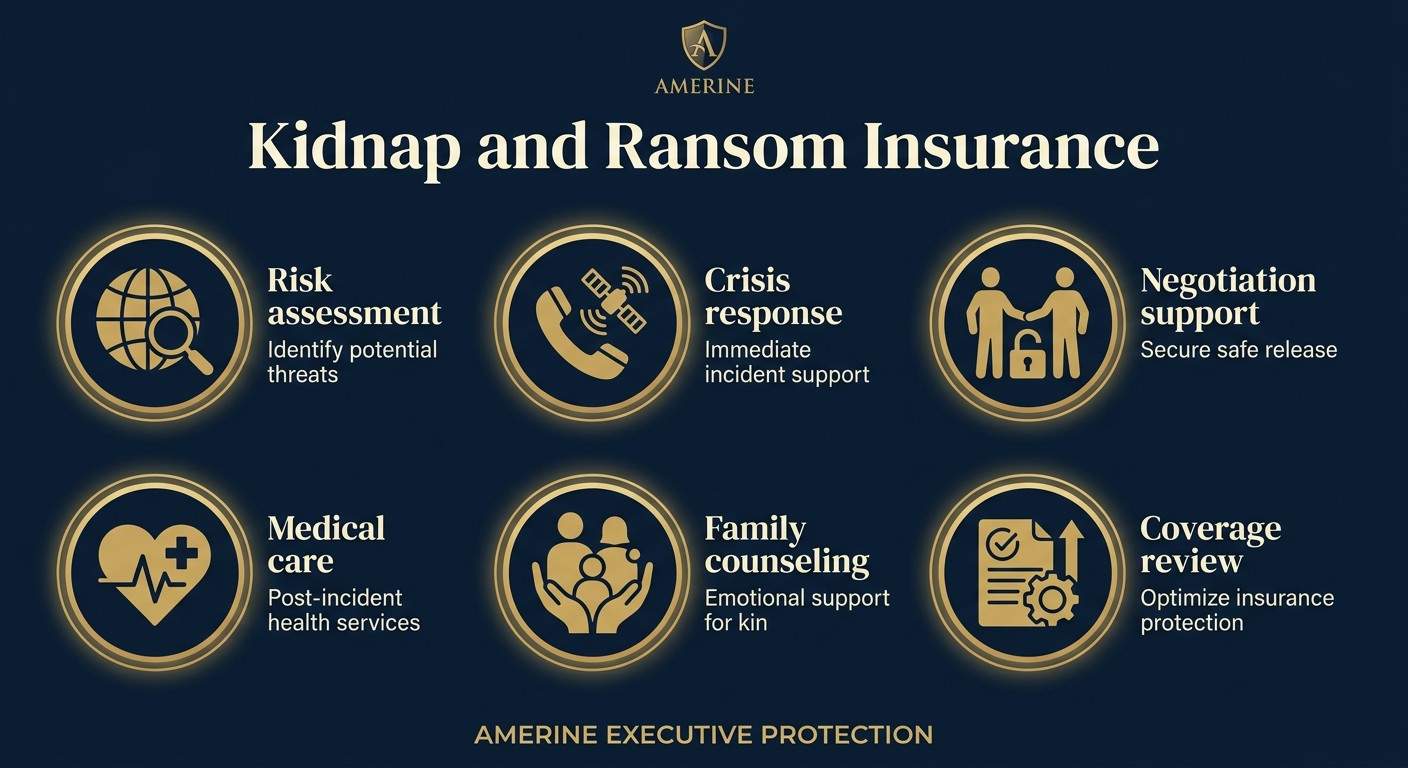
- K&R insurance
- Proof of life protocols established in advance
Virtual Kidnapping
Phone scams where callers claim to have kidnapped a family member. Prevention:
- Establish family code words for verification
- Do not provide information to unknown callers
- Verify the claimed victim's actual location before taking action
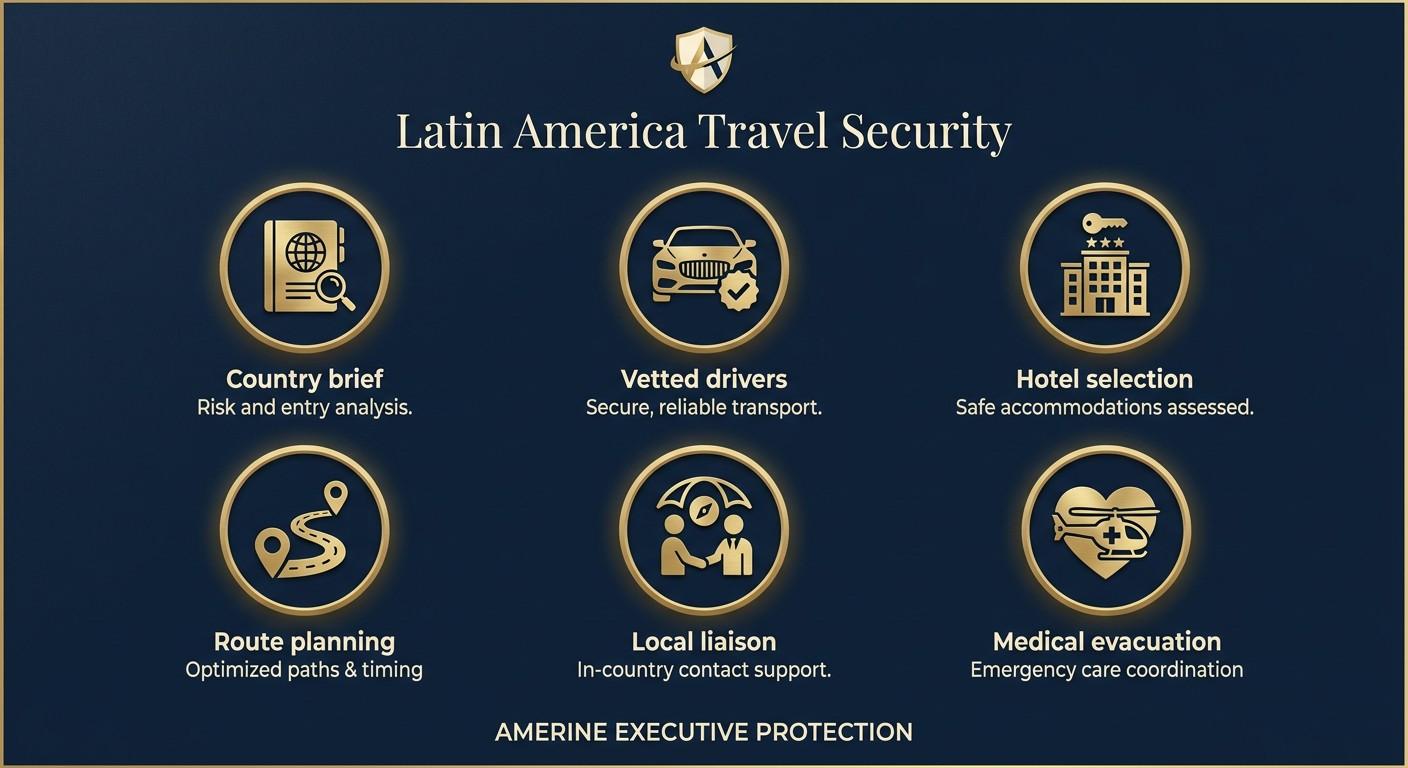
Security Best Practices for Latin America Travel
- Pre-travel intelligence briefing specific to your destination
- Secure ground transportation with vetted, trained drivers
- Low-profile behavior, no luxury watches, designer clothing, or flashy electronics
- Hotel security, upper floors, interior-facing rooms, security features
- Communication plan with check-in protocols and emergency contacts
- Medical evacuation insurance with air ambulance coverage
- Local security coordination through established networks
For executive protection anywhere in Latin America, Contact AMERINE. Your safety across the region is ensured by our vetted local operators and GSOC monitoring.