Event Security for High-Profile Gatherings and Corporate Functions
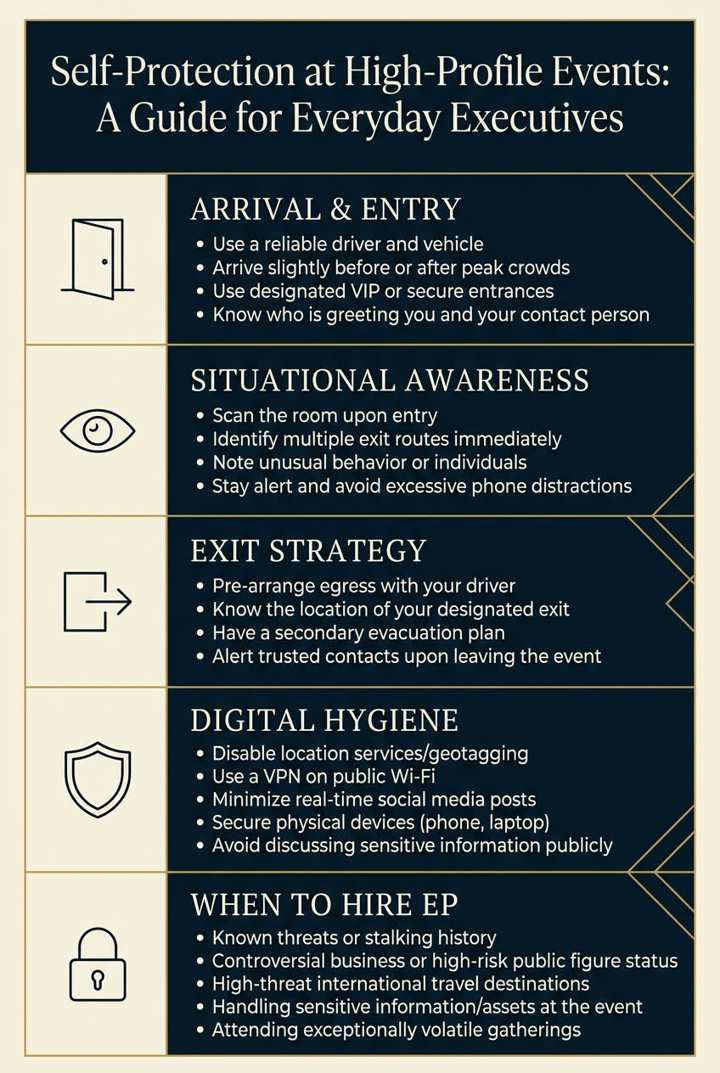
At an event, a protected individual is in an unfamiliar space, surrounded by crowds, while the advance team has less control over entry and movement. With good event security, the principal can participate fully without leaving their safety to chance.
The Event Security Challenge
Events create specific operational hurdles:
- Reduced Control: Working inside venues and among crowds that sit outside your standard security perimeter
- Increased Visibility: Public exposure during arrival, the main gathering, and departure
- Unpredictable Elements: Unvetted guests, protestors, gatecrashers, and media
- Complex Logistics: Multiple sites, tight timelines, and constant coordination between different teams
- Competing Priorities: Balancing safety requirements against the client's business or social goals
Types of Events Requiring Specialized Security
Corporate events include annual meetings and shareholder gatherings, industry conferences and trade shows, board retreats and executive offsites, and product launches and press announcements.
Private events range from galas and charity fundraisers to weddings and family celebrations. They also include private parties and social gatherings, along with awards ceremonies and recognition events.
Public Appearances
- Speaking engagements
- Media interviews
- Community events
- Political and advocacy activities
The Event Security Process
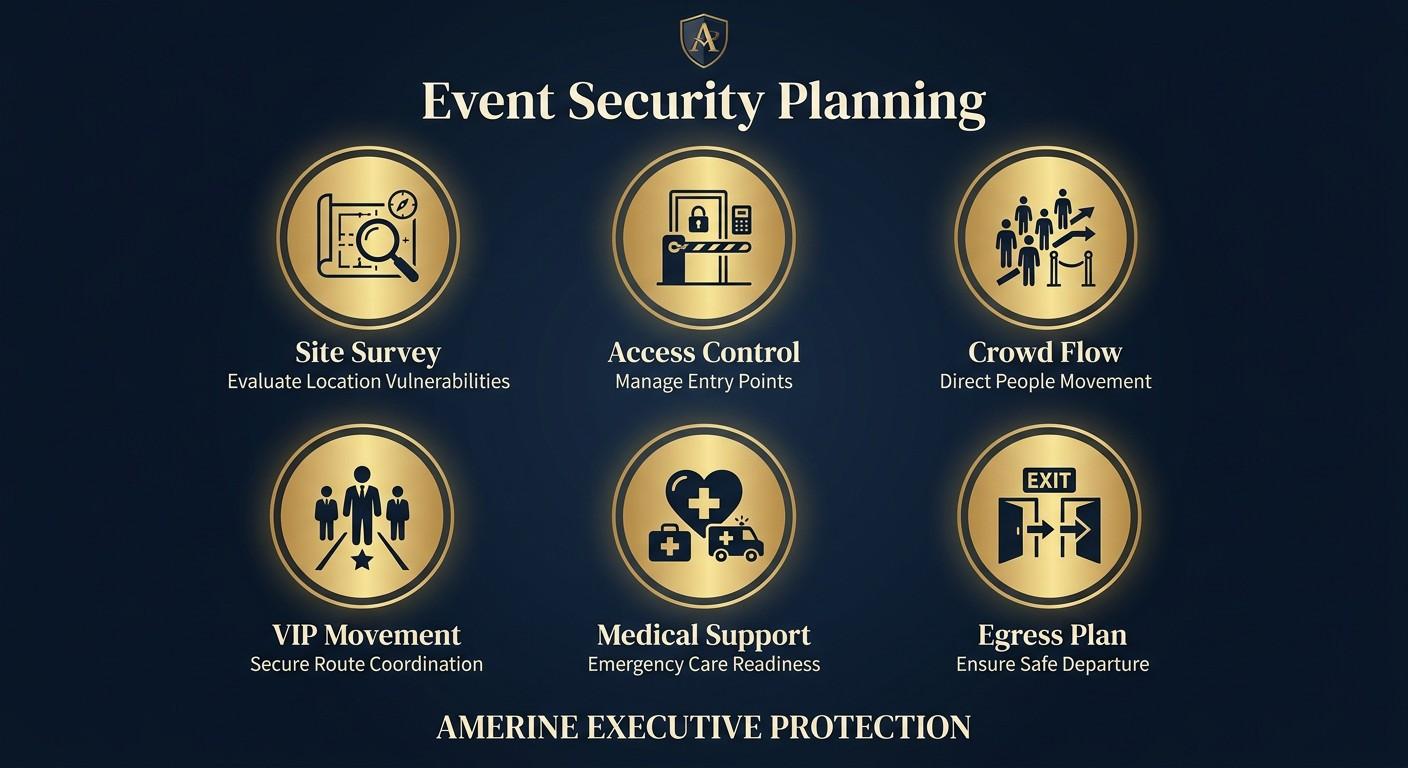
Before the event, advance work covers 1. assessing the venue and conducting a walk-through; 2. gathering threat intelligence; 3. planning access control; 4. coordinating emergency response; 5. planning transportation and movement; and 6. setting up communications.
During the event, execution involves 1. managing arrivals and departures; 2. providing close protection throughout the event; 3. moving between locations; 4. monitoring crowds and access; and 5. maintaining readiness for emergency response.
Post-Event
- Secure departure
- Incident documentation
- Lessons learned capture
- Intelligence updates
Venue Security Assessment
Before any commitment, the security team evaluates the physical site:
Physical security covers entry and exit points, emergency egress routes, and options for a safe room or shelter. Security staff, available resources, and camera coverage are also part of that work.
Access Control
- Credentialing systems
- Screening capability
- VIP access arrangements
- Restricted area controls
Coordination
- Venue security leadership
- Local law enforcement
- Emergency services
- Event management team
Protection During Events
Appropriate protection levels depend on:
[Threat Assessment](/threat-assessment-services)
- Specific threats to the principal
- Event-specific concerns
- Venue and location risks
- Attendee profile
Principal Requirements
- Desired visibility level
- Interaction expectations
- Mobility needs
- Comfort with security presence
Event Type
- Public vs. private
- Formal vs. casual
- Duration and complexity
- Other VIPs present
Discrete vs. Visible Protection
Event security can be configured for:
For discreet protection, operators wear appropriate attire and blend in with other attendees. They stay close without making their positioning obvious, keeping the visible security presence minimal.
Visible Protection
- Clear security presence
- Suited professionals
- Obvious positioning
- Deterrent posture
Corporate Event Considerations
Business events require additional attention:
- [Duty of Care](/duty-of-care-security): Demonstrable protection for executives
- Brand Alignment: Security that reflects corporate image
- Stakeholder Management: Coordination with event organizers
- Media Handling: Appropriate responses to press
- Documentation: Event security reporting
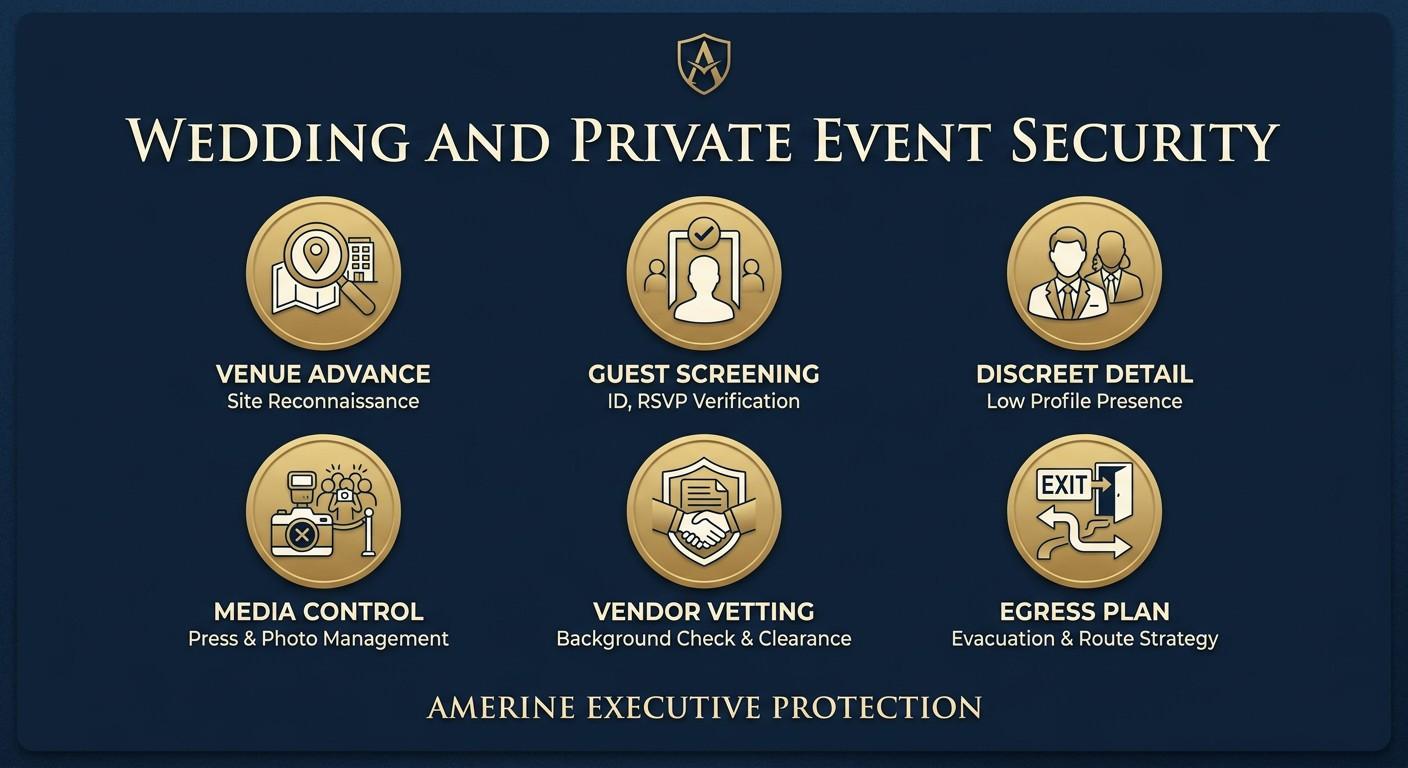
Private Event Security
Social and family gatherings have unique dynamics:
- Guest Experience: Security that protects without diminishing the celebration
- Family Sensitivity: Appropriate interaction with all generations
- Privacy Protection: Preventing unauthorized recording or disclosure
- Vendor Vetting: Screening caterers, entertainment, and temp staff
Transportation Integration
Events require coordinated transportation:
- Secure arrival and departure
- Parking and vehicle staging
- VIP drop-off coordination
- Emergency evacuation vehicles
- Multi-location movement
Emergency Response Planning
Every event needs emergency protocols:
- Medical emergency response
- Fire and evacuation procedures
- Active threat response
- Communication protocols
- Family notification procedures
The ROI of Professional Event Security
Investing in event security provides:
- Focus: Keep your attention on the event, not security concerns
- Brand Protection: Preventing incidents that could cause reputational damage
- Duty of Care: Demonstrable protection for liability mitigation
- Smooth Execution: Logistics support beyond pure security
Planning Your Next Event
Professional event security ensures you can focus on what matters when you're attending a major conference or hosting a private celebration. Get in touch with our team to discuss security needs for your upcoming event.