When the Networks Go Silent
Recent global events show how quickly and completely modern communication systems can fail, even when you've come to count on instant contact. Examples range from the Iran conflict disrupting regional infrastructure to cyberattacks targeting telecommunications networks.
If you're an executive, part of a UHNW family, or have loved ones in conflict-affected regions, a redundant communication plan is a prudent precaution, not paranoia. Disruption is a matter of when, not if. The question is how prepared you are.
Understanding Communication Vulnerabilities
How Networks Fail
Communication networks are far more fragile than most people assume:
- Cell towers require continuous power and backhaul connections. Most carry only 4 to 8 hours of battery backup.
- Internet service depends on undersea cables, land-based fiber lines, and physical routing facilities, all of which remain vulnerable to sabotage and cyberattacks.
- Power grids are routine targets in active conflicts. Without electricity, all electronic communication eventually goes dark.
- Government shutdowns: several regional authorities have shown they can shut down domestic internet and cellular access entirely during civil unrest or military operations.
The Iran Conflict Communication Impact
The conflict involving Iran has already directly disrupted communications. Gulf states have experienced intermittent cellular outages during missile engagements, and undersea fiber optic cables in the Persian Gulf have been disrupted. Allied nations have faced cyberattacks on telecommunications infrastructure. GPS jamming and spoofing affect both navigation and timing-dependent data networks, while several Middle Eastern countries have temporarily throttled internet access during periods of military escalation.
Tier 1: Satellite Communication (Your Primary Backup)
Satellite communication is your lifeline when terrestrial networks fail. For executives and families, the options below are ranked by practicality.
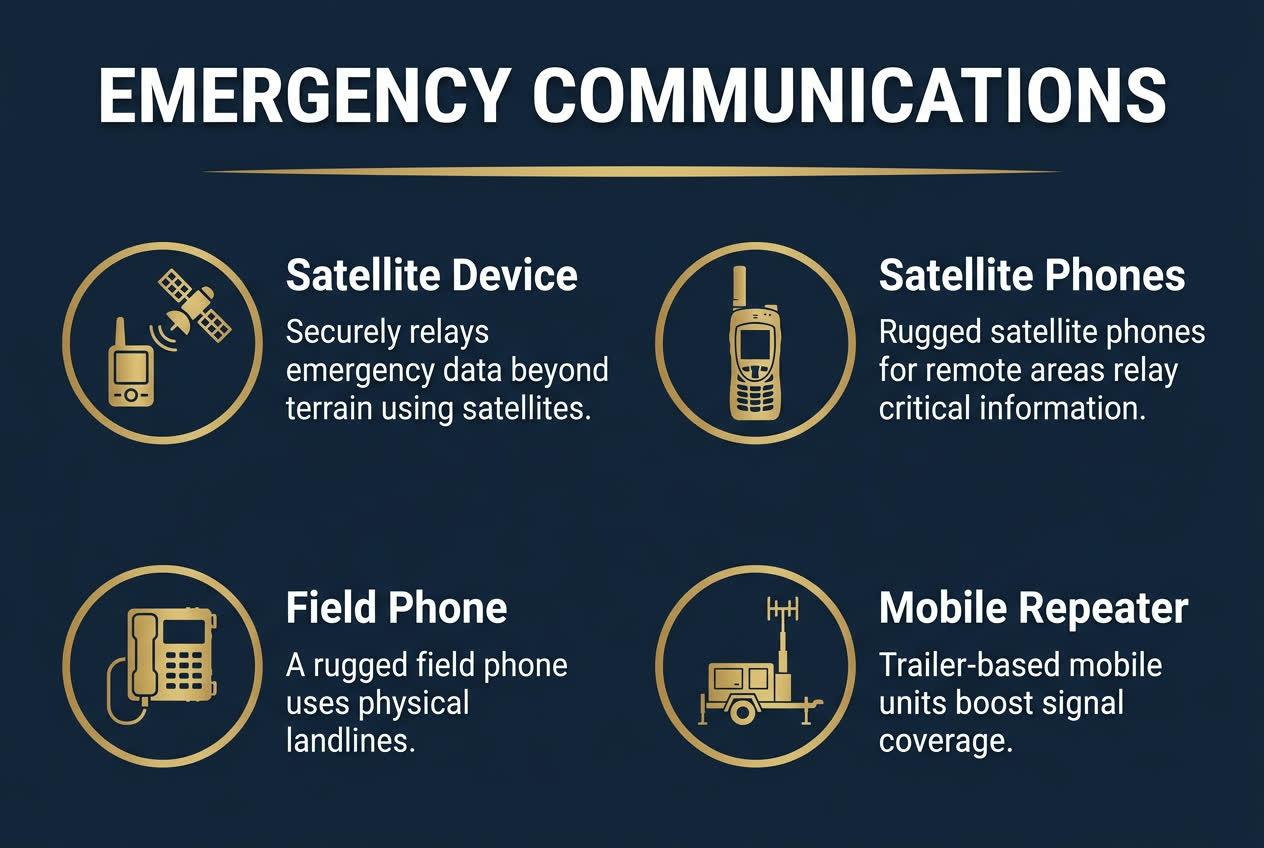
Satellite Phones
For true global coverage, Iridium is recommended, with service that includes the poles and open ocean. It works anywhere you have a view of the sky. Models include the Iridium 9575 Extreme for voice/SMS and the Iridium GO! exec for smartphone integration. Pre-program critical numbers and practice making calls before you need to.
Thuraya is best for the Middle East/Asia, offering excellent coverage across the Middle East, Africa, Asia, and Europe. You can also get dual-mode phones that support satellite + GSM.
Satellite Messengers (Text-Based)
Garmin inReach Mini 2 is best for family members who need a simple, reliable check-in device. It supports two-way text messaging through the Iridium network, SOS with a 24/7 monitoring center, and GPS tracking you can share with family.
Apple iPhone 14+ offers Emergency SOS via Satellite as a built-in capability with no additional subscription. Communication is limited to emergency services and pre-set contacts via Find My. It's a valuable backup layer, though it isn't a full communication solution.
Satellite Internet
For extended stays in areas with compromised infrastructure, Starlink Mini is the best fit. This portable satellite internet terminal provides full internet access, including voice, video, and data. It requires a power source and draws ~40-75W.
Tier 2: Radio Communication (Grid-Independent)
Radio requires no infrastructure: no cell towers, no satellites, no internet. It is the ultimate fallback.
HAM Radio (Amateur Radio)
- Range: Local to global, depending on frequency and atmospheric conditions
- Requires: FCC license (Technician class is entry level; study takes ~2 weeks)
- Recommended starter: Baofeng UV-5R for local comms; Yaesu FT-891 for HF/global reach
- Key advantage: Ham operators maintain an organized emergency communication network (ARES/RACES) that activates during disasters
GMRS/FRS Radios (Family Radios)
- Range: 1-5 miles typical (up to 30 miles with repeaters on GMRS)
- No license required for FRS; GMRS requires a simple FCC license with no test
- Recommended: Midland GXT1000VP4 or Motorola T800
- Best for: Family contact within a neighborhood or private compound during local emergencies
Hand-Crank Emergency Radio
- Receives AM/FM and NOAA Weather Radio alerts
- No power required: hand crank and solar panel built in
- Recommended: Midland ER310 or Eton FRX5-BT
- Every household should own one. Period.
Tier 3: Mesh Networking (Peer-to-Peer, No Infrastructure)
Mesh networks establish direct device-to-device communication without cell towers or central infrastructure:
goTenna Pro X2
- Text messaging and GPS location sharing between devices
- Each device extends the network: more devices mean greater range
- Range: 4+ miles per hop, virtually unlimited with enough nodes
- End-to-end encryption
- Best for: Security teams, family compounds, neighborhood networks
Meshtastic (Open Source)
- LoRa-based mesh networking
- Text messaging and GPS tracking
- Range: 1-10+ miles per node, depending on terrain
- Growing user base, particularly popular with preparedness-minded individuals
- Best for: Neighborhood communication networks
Building Your Family Communication Plan
An actionable plan depends on everyone knowing when and how to use the technology. Without that knowledge, the technology isn't useful.
Step 1: Establish Communication Tiers
Create a priority list your entire family understands:
- Primary: Cell phone call/text
- Secondary: Satellite messenger (Garmin inReach or similar)
- Tertiary: GMRS/FRS radio on pre-agreed channel
- Emergency: Physical rally point
Step 2: Set Check-In Protocols
- Daily check-in window: Agree on a specific time (e.g., 7:00 PM local time) for a brief status check
- Missed check-in protocol: If a check-in is missed, escalate to the next communication tier
- Code words: Establish simple code words for "I'm safe," "I need help," and "come to rally point"
Step 3: Pre-Program Everything
- All satellite devices should have critical contacts pre-loaded
- GMRS radios should be set to agreed-upon channels with privacy codes
- Emergency contact cards (laminated, wallet-sized) for each family member with:
- All communication methods and frequencies
- Rally point addresses
- Out-of-area contact person (someone far from your region who can relay messages)
Step 4: Practice Quarterly
- Run a "communications down" drill every 3 months
- Turn off cell phones and practice using backup systems
- Walk through the escalation protocol with all family members
- Children and elderly family members need extra practice and simplified instructions
Essential Power Solutions
All electronic communication requires power. Plan for extended outages:
- Portable solar panels (Anker 625 or Goal Zero Nomad): Charge devices indefinitely with sunlight.
- High-capacity power banks (minimum 20,000mAh): Keep 2-3 charged at all times.
- Hand-crank generators: Backup for cloudy conditions.
- Vehicle power inverter: Your car battery is a massive power reserve.
- Rechargeable battery stockpile: AA and AAA rechargeables for radios and flashlights.
What AMERINE Recommends for Executives
Based on our experience protecting clients in conflict zones and disaster scenarios, here is our recommended communication kit:
The Executive Communication Kit
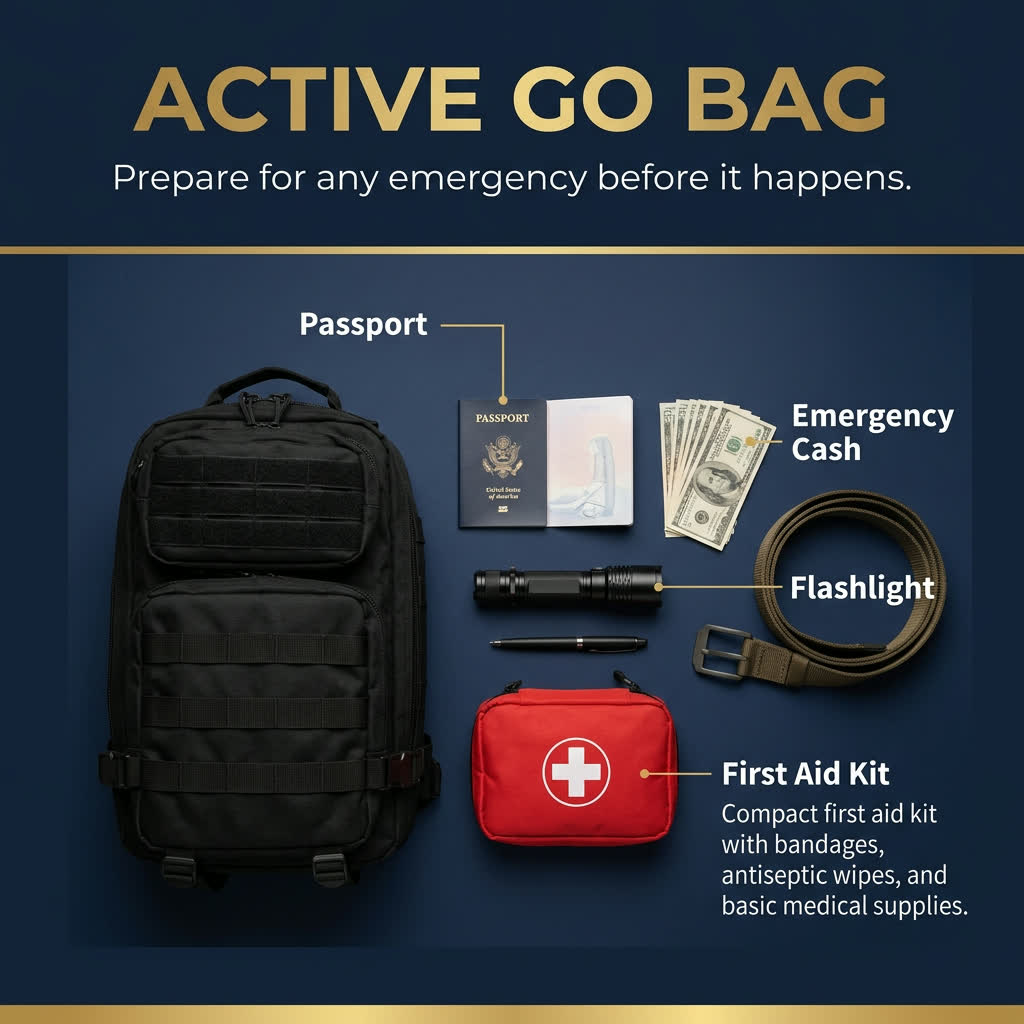
- Garmin inReach Mini 2 with active subscription, always in your go bag
- Iridium satellite phone, for voice communication when cellular fails
- Pair of GMRS radios, for local/family communication
- Hand-crank emergency radio, for receiving emergency broadcasts
- 100W portable solar panel + 2x high-capacity power banks
- Laminated communication plan cards for all family members
For Clients in or Near Conflict Zones, Add:
- Starlink Mini terminal, full internet backup
- goTenna Pro mesh devices (4-pack), for security team coordination
- Faraday bags, to protect devices from EMP or electronic surveillance
- Secondary satellite phone cached at a separate location
The Bottom Line
For the executives and families we protect, preparedness means taking responsibility, not acting out of fear. Outcomes depend on the 72 hours after communication networks fail. With redundant communication plans, they maintain situational awareness, coordinate with security teams, and keep their families informed.
Those without plans go dark. And in a crisis, going dark is the most dangerous thing you can do.
If you need a communication and emergency preparedness plan tailored to your family or organization, AMERINE Executive Logistics provides comprehensive security assessments for executives and UHNW families that include communication resilience planning.
Contact our team for a confidential consultation.